MTR spins its 90-yr-old legacy to keep up with health-conscious consumers

The 90-year-old food brand adapts to smaller households, looks to balance health with taste and convenience to tip the millennial scales
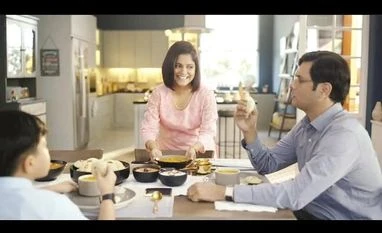
The new advertising narrative focuses on ease of use and on sharing meal-time responsibilities
T E Narasimhan Chennai
4 min read Last Updated : Aug 29 2019 | 11:20 PM IST
Bengaluru-born MTR, which is now part of the Norwegian foods-to-metals group Orkla, is putting together a whole new marketing playbook to keep up with younger, more demanding and health-conscious consumers. Having changed its packaging and tweaked its logo about two years ago, the company is now looking at smaller portion sizes, adapting to local tastes and flavours, creating convenient quick-fixes for traditional meals and healthier variants, all in an attempt to bring in the young into its fold.

The aim is that even as the brand keeps its faith in the traditional Southern markets, its portfolio must cater to a more cosmopolitan and youthful consumer group. For instance, the big metros in the South today have a large diaspora from Bengal, Orissa and several other states, all potential consumers for the brand. 

It is also taking a sharp digital turn with its marketing budget. And the advertising is being sensitised to a more egalitarian household where the entire family, not just mothers and wives, is responsible for the food on the table.  

In the midst of all these pulls and pushes, MTR is up against a rapidly evolving ecosystem for food. While the traditional masala portfolio continues to hold its sway, the brand is up against stiff competition from food delivery apps and the thriving community of restaurants that they support for its ready-to-cook and ready-to-eat fare. And the other challenge, as it brings a new range of products and sensibilities into the kitchen, is staying true to its loyalists and old recipes. 

Sanjay Sharma, CEO, MTR Foods says that the company has kept its ears close to the ground and always listened to consumers. The brand, he believes, is agile and adaptable, even at 90. For instance almost five years ago, they identified the emerging millennial as a target group—the segment is expected to account for nearly 77 per cent of the country’s population by 2030. This consumer is most likely to live alone or with just one dependant, earn more and wants food that is easy to dish out and can be consumed on the go. Hence says Sharma, the company looked at new package sizes, for instance a pack of two Gulab jamun alongside the regular pack of 10. 

The company has also added a lot more digital to its marketing mix. MTR used to spend 5 per cent of its total advertising budget on digital, today it is about 10-15 per cent and the numbers are likely to go up to 30-40 per cent. “All these little things that we are doing is changing the way Brand MTR is perceived. It is seen as a much younger brand,” says Sharma. The results have been  favourable so far—in 2016-2017 sales revenue was around Rs 180 crore, today it is Rs 900 crore and it is expected to close the year with Rs  1,000 crore.

Harish Bijoor, founder, Harish Bijoor Consults says that MTR needs to look at ways to bridge tradition and modernity. And the challenge lies in keeping the old and familiar tastes intact even as the products, look and logo change. Catering to the health conscious is also a tricky proposition. For one, the company’s experience shows that people may say they want to eat healthy but don’t follow through on their desires when it comes to traditional food. For example, the company rolled out a multigrain range and such other variants of its trademark idli and dosa batter. But these have not met with the voluminous attention from consumers that many expected and it is definitely a long way off, until such products replace traditional fare. 

Similarly, consumers want convenient products without any change to the taste. Sharma says that they have worked at their instant dosa-idli mix, which cuts out the need for overnight soaking of the ingredients, to ensure that it meets the taste expectations while catering to the convenience factor. That is a challenge that will have to be met for every product that they adapt to fit the needs of the new and emerging consumer. 

The company has close to 300,000 outlets across the country to distribute its products and is also betting big on e-commerce, which accounts for 1.2 per cent of its total turnover.

One subscription. Two world-class reads.

Already subscribed? Log in

Subscribe to read the full story →
*Subscribe to Business Standard digital and get complimentary access to The New York Times

Smart Quarterly

₹900

3 Months

₹300/Month

SAVE 25%

Smart Essential

₹2,700

1 Year

₹225/Month

SAVE 46%
*Complimentary New York Times access for the 2nd year will be given after 12 months

Super Saver

₹3,900

2 Years

₹162/Month

Subscribe

Renews automatically, cancel anytime

Here’s what’s included in our digital subscription plans

Exclusive premium stories online

  • Over 30 premium stories daily, handpicked by our editors

Complimentary Access to The New York Times

  • News, Games, Cooking, Audio, Wirecutter & The Athletic

Business Standard Epaper

  • Digital replica of our daily newspaper — with options to read, save, and share

Curated Newsletters

  • Insights on markets, finance, politics, tech, and more delivered to your inbox

Market Analysis & Investment Insights

  • In-depth market analysis & insights with access to The Smart Investor

Archives

  • Repository of articles and publications dating back to 1997

Ad-free Reading

  • Uninterrupted reading experience with no advertisements

Seamless Access Across All Devices

  • Access Business Standard across devices — mobile, tablet, or PC, via web or app

Topics :MTR Foods

Next Story


