New draft rules set to clamp down on CSR activities through trusts

The proposed rules would not allow trusts and societies to undertake any CSR activities.
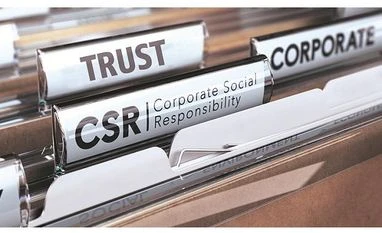
New draft rules set to clamp down on CSR activities through trusts
Ruchika Chitravanshi New Delhi
4 min read Last Updated : Mar 17 2020 | 1:50 AM IST
The government has made the norms for corporate social responsibility (CSR) more stringent. In new draft rules, greater onus has been put on companies for reporting details of their CSR activities and how such funds are used. The corporate affairs ministry has invited public comments on the draft rules by March 28. 

The proposed rules would not allow trusts and societies to undertake any CSR activities. The government wants to restrict such spending only through a company itself, an official pointed out. “Any entity established under an act of Parliament or a state legislature” can also take up CSR, according to the draft rules. 

This would mean that while entities such as Tata Trusts or Aditya Birla Group trusts can continue to do charitable work, the group firms cannot undertake CSR activities through the trust route, a company law expert said. Trusts and societies are regulated to a very limited extent, which may reduce accountability of CSR activities. “Some companies try to misuse rules and set up dummy trusts... These rules are based on learnings from such practices to make the system clean,” said Lalit Kumar, partner, JSA. 

The proposed rules also suggest a new definition of CSR, excluding activities in pursuance of normal course of business or by companies outside India. Any contribution made to a political party would not count as CSR nor will any activity that significantly benefits more than 25 per cent of the employees of a company and their families.

Companies will now be required to submit a much more comprehensive form providing details of not just ongoing projects, but others as well. The reporting is not limited to the current financial year but extends to previous financial years too. 

For this purpose, the government has proposed to insert a definition for ongoing projects — “a multi-year project undertaken by a company in fulfillment of its CSR obligation having timelines not exceeding three years excluding the financial year in which it was commenced…” 

Companies in a separate form will have to provide the details of CSR amount spent or unspent for the preceding three financial years, according to the proposed rules. 

“These rules are complex but should bring greater scrutiny and transparency to make sure laws are not abused by anyone,” said Ankit Singhi, partner, Corporate Professionals. 

The proposed rules also require that the chief financial officer or the person responsible for financial management to certify that the CSR funds have been utilised for the purpose and in the manner approved by the board of a company. 

The responsibility of the CSR committee has also gone up for formulating and recommending to the board an action plan in pursuance of its CSR policy.

It is also proposed to insert a new provision relating to the impact assessment of CSR projects undertaken by the company. It will be applicable on a company having the obligation of spending an average CSR amount of Rs 5 crore or more in the three immediately preceding financial years.

As recommended by a high-level committee on CSR, the rules propose setting up of a national CSR fund which will be utilised for the purposes of projects in the areas specified in Schedule VII - such as Swachch Bharat Kosh and the Prime Minister’s Relief Fund among others. The guidelines and the administration of the fund are yet to be notified. 

Also, there’s a proposal to include a new provision relating to surplus arising from CSR projects. The surplus shall be ploughed back into the same project or transferred to the unspent CSR account, to be opened by a company.

While companies are required to display the content of their CSR policy on their website, the government has specified that they will now have to upload other details including composition of the CSR Committee along with the CSR Policy and projects.

One subscription. Two world-class reads.

Already subscribed? Log in

Subscribe to read the full story →
*Subscribe to Business Standard digital and get complimentary access to The New York Times

Smart Quarterly

₹900

3 Months

₹300/Month

SAVE 25%

Smart Essential

₹2,700

1 Year

₹225/Month

SAVE 46%
*Complimentary New York Times access for the 2nd year will be given after 12 months

Super Saver

₹3,900

2 Years

₹162/Month

Subscribe

Renews automatically, cancel anytime

Here’s what’s included in our digital subscription plans

Exclusive premium stories online

  • Over 30 premium stories daily, handpicked by our editors

Complimentary Access to The New York Times

  • News, Games, Cooking, Audio, Wirecutter & The Athletic

Business Standard Epaper

  • Digital replica of our daily newspaper — with options to read, save, and share

Curated Newsletters

  • Insights on markets, finance, politics, tech, and more delivered to your inbox

Market Analysis & Investment Insights

  • In-depth market analysis & insights with access to The Smart Investor

Archives

  • Repository of articles and publications dating back to 1997

Ad-free Reading

  • Uninterrupted reading experience with no advertisements

Seamless Access Across All Devices

  • Access Business Standard across devices — mobile, tablet, or PC, via web or app

Topics :CSR normsCompanies

Next Story



