Next big thing is to take solar to everyone's life: ISA Director-General

In a Q&A, Dr Ajay Mathur talks about the Alliance's current agenda, and financing and capacity building plans across green sectors
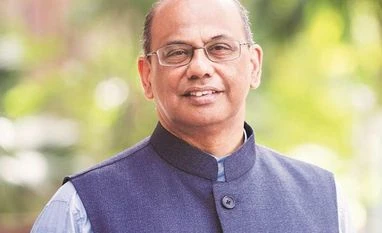
Ajay Mathur
International Solar Alliance (ISA) Director-General (D-G) Ajay Mathur
Shreya JaiNitin Kumar New Delhi
4 min read Last Updated : Oct 17 2022 | 11:15 PM IST
International Solar Alliance (ISA) is India’s flagship global organisation aimed at improving solar energy access across the globe and also building inter-country green energy capacity sharing infrastructure. A consortium partnership of 121 countries, ISA will be hosting its fifth ministerial in New Delhi this week. Ahead of the conference, Dr Ajay Mathur, director-general, ISA talked with Shreya Jai and Nitin Kumar on the current agenda, their financing and capacity building plans across green sectors. Edited excerpts:

What is on the agenda for the fifth ministerial of the ISA this time?

The assembly typically takes care of a few statutory requirements such as approving budget and expenditure and the positions that ISA has. The second is about future programmes. We need emphasis on risk reduction in developing countries for private sector investors to come in. One of the things we will take to the assembly is an institutional model that helps us provide the kind of risk management that could possibly get the private sector to put in money. The next big thing is bringing solar to everybody’s life. We are also going to the assembly with a discussion on a mechanism to develop new solar entrepreneurs.

What is ISA's current budget and what is the quantum of increase that you anticipate?

Last year we had no international staff. This time, with international staff in place and activity increasing, we're looking at a budget of about $9 million. Next year we expect this to increase to $13-15 million.

What financial instruments are you looking at for fundraising?

The resources are largely provided by India, which has contributed approximately Rs 100 crore a year for the next three years as sovereign funding. There are other countries which give small amounts. We are looking at contributions by various countries. Resources are also being provided by several foundations, which have together committed close to $40 million for the next three years.

There was a proposal for green energy and infra companies to invest in ISA, in return for exposure to new markets. Why has it not kicked off?

The key issue continues to be what value addition ISA will provide to these corporate entities. This year, we have created a private sector advisor group that consists of developers, manufacturers, and financiers of solar energy. We will engage with them on the kind of value-added activities they can get into because of ISA. In a few African countries, we are building a model in which new solar facilities are created by bidding. So, any company can bid, including international solar developers. Currently, 12 such bids have been announced in countries such as Mali, Cuba, Venezuela, Prague, Uganda, Ethiopia etc with a cumulative capacity of 9.5 Gw.

What is the status of the ‘One Sun, One World, One Grid’ project?

A consortium led by EDF is looking at this. They are doing a study looking at what are the kinds of demands that could occur. And at the same time what are the kinds of costs that it would take to build these inter-connectors. We are looking at strengthening grids within countries and also interconnecting these regions.

What will ISA push at COP27 this year?

We are not members of COP, though we have a formal association with the UNFCCC secretariat. We will look at investment strategies taken for climate and make sure they are available for solar, particularly in counties into which money is not flowing today.

There is some criticism that ISA's role as a project facilitator has become diluted...

I think with the 9.5 Gw of facilitation that we are doing, we are very much in there as part of the development of solar across the world. Through other projects such as the risk facility or entrepreneurial facility we are adding to action in solar where none has happened.

One subscription. Two world-class reads.

Already subscribed? Log in

Subscribe to read the full story →
*Subscribe to Business Standard digital and get complimentary access to The New York Times

Smart Quarterly

₹900

3 Months

₹300/Month

SAVE 25%

Smart Essential

₹2,700

1 Year

₹225/Month

SAVE 46%
*Complimentary New York Times access for the 2nd year will be given after 12 months

Super Saver

₹3,900

2 Years

₹162/Month

Subscribe

Renews automatically, cancel anytime

Here’s what’s included in our digital subscription plans

Exclusive premium stories online

  • Over 30 premium stories daily, handpicked by our editors

Complimentary Access to The New York Times

  • News, Games, Cooking, Audio, Wirecutter & The Athletic

Business Standard Epaper

  • Digital replica of our daily newspaper — with options to read, save, and share

Curated Newsletters

  • Insights on markets, finance, politics, tech, and more delivered to your inbox

Market Analysis & Investment Insights

  • In-depth market analysis & insights with access to The Smart Investor

Archives

  • Repository of articles and publications dating back to 1997

Ad-free Reading

  • Uninterrupted reading experience with no advertisements

Seamless Access Across All Devices

  • Access Business Standard across devices — mobile, tablet, or PC, via web or app

Topics :solar energysolar projectsGreen energyInternational Solar AllianceEDF in Indiasolar power India's solar energysolarBudgetExpenditure

Next Story



