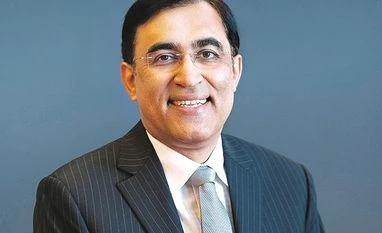
The past few years have been tough for non-banking financial companies (NBFCs). Changes on the regulatory front, with the Reserve Bank of India aligning NBFCs’ oversight norms with that of banks, funding concerns, and pandemic-related credit quality concerns took a toll on the sector. All this is very much in the past, says Rajiv Sabharwal, managing director and chief executive officer, Tata Capital, in an interview with Raghu Mohan. Edited excerpts:
NBFCs appear to be on a better track now? What’s the sense you get on the business?
We are on a strong growth trajectory, and all of us are riding on it -- whether they are banks or NBFCs. Credit growth is expected to be closer to around 12 per cent this year and we are seeing this growth happening across sectors. There’s a good pick up in retail (credit), MSMEs (micro, small and medium enterprises), and the working capital side. On the corporate side, investments have to pick up. Capacity utilisation is something that the industry had been waiting for. It would have been stronger, but the global economy has been impacted.
Given the switchover in interest rates, what will be the impact of this on your borrowing costs and margins?
Most large lenders have (given out) floating-rate loans, because of which they will be passing on the increase in interest rates to customers. Because of this, the impact on margins may be minimal. Usually, there is a lag between an increase in interest rates and lending rates. But after that lag, I believe margins may not get significantly impacted, and they may remain the same.
Despite corporate results being good, we are yet to see capacity expansion kick in a big way…
When I last saw the numbers, capacity utilisation had been picking up, and it did cross 75 per cent for most sectors. GST collections have also shown a similar trend, and that’s also because of the fact that we have a large domestic economy. And post-Covid, things have opened up completely.
How does retail credit look at this point?
The fastest growth is led by housing and personal loans. My belief is that if the overall economy sees growth in credit of 12 per cent, retail should be growing somewhere between 15 per cent and 20 per cent. Housing is seeing great demand and the auto segment, too. Similarly, the personal loans and credit card segments are doing extremely well. MSMEs have got a big boost with the extension of the ECLGS (Emergency Credit Line Guarantee Scheme). So, the belief is that retail and the MSME sector should grow at around 15 per cent for the year
What explains the buoyancy in retail credit, given that jobs and salaries were impacted?
During Covid-19, a lot of people lost their jobs, and some who didn't lose their jobs, saw their salaries impacted. This was especially for employees in high-contact industries where the impact of the pandemic was more -- whether it was travel, tourism, airlines, and so on. As the economy opened up, these people have not only gotten their jobs back, but in most cases, are back to pre-pandemic salaries. In fact, many in these industries tell us it’s difficult to find people to work (to hire). So, with salaries coming back and with more people also getting jobs, we are seeing demand coming back. It could also be because of pent-up demand. For example, in the passenger vehicle segment, the waiting period in some cases is six months or more.
Can you give us a sense of Tata Capital’s cross-selling strategy vis-à-vis group companies?
I think what's important for us is to look at areas in which we can derive synergies within the group. We can't be direct lenders because there are limitations. Because if we lend more than a particular amount, that will impact our capital adequacy ratio. What we are trying to focus on is there is a large base of employees within the group. Can we cross-sell more retail loans to them? There are a lot of suppliers and vendors to large (group) companies. We can be financial partners to them. For lending, you could look at working capital, or term loans for them. So, it's more of ecosystem lending, which we do. Similarly, TCS is a great company on the technology side. How can it support us on our tech platforms? So, these are some of the synergies we have looked at in terms of working together and on the lending side. It’s more to do with the ecosystem and as far as direct lending is concerned, that’s a very, very, small proportion.