Auto major Maruti Suzuki on Thursday reported a 2.05 per cent year-on-year (YoY) growth in consolidated profit at Rs 1,419.6 crore for the September quarter of financial year 2020-21 (Q2FY21). Its revenues rose 10.34 per cent to Rs 18,755.6 crore.
In comparison, the company had posted revenue of Rs 16,997.9 crore and profit of Rs 1,391 crore in the corresponding quarter last year.
On a standalone basis, Maruti’s revenue came in at Rs 18,744.5 crore, while profit after tax (PAT) stood at Rs 1,371.6 crore.
During the quarter, Maruti sold around 393,000 vehicles, up 16.2 per cent YoY. Sales in the domestic market stood at 370,619 units, a rise of 18.6 per cent YoY. Exports stood at 22,511 units, a 12.7 per cent decline over the previous year.
“The impact of people wanting to buy vehicles for personal use and festivals will be over by December. The rural segment will continue to grow substantially. We don’t know how the urban demand will be and how much income people in urban markets will be left with. I don’t see any strong urban demand after festive season since people can’t afford vehicles,” said RC Bhargava, chairman of Maruti Suzuki.
While demand recovery is positive, margins could remain under pressure in Q3 and Q4.
Volumes grew 16 per cent in Q2 after an 80 per cent YoY drop in volumes and revenues in Q1. The recovery, led by pent-up demand and preference for personal mobility, helped Maruti post revenue growth of 9.7 per cent in Q2. However, realisations were lower, given the product mix tilted towards entry-level cars and with the absence of a diesel vehicle in the portfolio. Growth has largely been led by the rural markets because of the lower impact of Covid-19 there, widespread monsoon, and record rabi season.
The company said demand has been robust at the beginning of the festive season with strong sales during the Navratri period, which is expected to continue till Diwali.
However, the company remains cautious on full-fledged recovery, given concerns over a second wave of Covid-19.
The share of first-time buyers continued to rise, accounting for 48 per cent of sales (500 basis points higher YoY). With functionality the key, replacement demand (upgrades) was lower than the previous year.
The volume recovery and better operating leverage had a positive impact on operating profit and margins.
While profit before depreciation, interest, taxes and amortisation was up over 20 per cent, margins, too, were higher by 80 bps than the year-ago quarter. Lower employee and promotion costs and cost reduction efforts helped improve operating performance.
While volume remains the single biggest driver of profitability, the company said margins could come under pressure over the next couple of quarters, with the rise in commodity costs. Prices of precious metals, especially Rhodium, have tripled over the past year, impacting margins.
Given the pressure on demand, the company has been unable to pass on the higher costs and is absorbing them. Higher RM costs led to a 1.4 percentage point impact on Q2 margins. The only positive is that discounts reduced from year-ago levels.
While a recovery is positive, this has already been factored in into the stock price, which has risen 15 per cent in the last three months. Margin pressures could remain an overhang, preventing further upside.

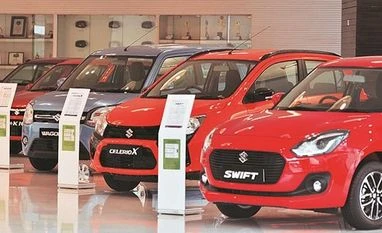 "Pent-up demand, rural growth bring Maruti Suzuki back in recovery lane")











