People will fly if price is right: Neil Mills
Interview with CEO, SpiceJet
Sharmistha Mukherjee New Delhi SpiceJet Ltd narrowed its net loss to Rs 186 crore in the last quarter despite the sluggish growth in domestic traffic. Chief Executive Officer
Neil Mills tells
Sharmistha Mukherjee how the promotional offer of making available one million discounted seats and the focus on scaling up international and regional operations helped in boosting passenger traffic and load factors. Edited excerpts :
SpiceJet had posted a net profit of Rs 102 crore in the third quarter despite operating in a high-cost environment. What are the factors that put pressure on your margins in the last quarter? The third quarter is traditionally the strongest with lots of holidays generating incremental traffic. In January and February, fuel prices went up considerably, which increased our operational expenses. We needed to increase fares, but could not because of the sluggish demand situation. The continuing weakness of the rupee additionally hit our operations. The rupee has depreciated by 13 per cent year-on-year. Since 70 per cent of our costs are dollar denominated, the overall impact was to the tune of Rs 220 crore.
Despite the slow growth in domestic traffic in the industry, the passenger load factor (PLF) for SpiceJet increased in the fourth quarter. How much did the promotional offer launched in January help in boosting passenger numbers? The promotional fares certainly helped. We tried to get more people to fly by offering fares they could not resist. We had put one million seats up under the promotional offer and were able to sell 700,000 tickets within three days. This shows that as long as the pricing is right, people are willing to fly.
In fact, in the quarter, our passenger traffic grew by around 20 per cent. PLF improved to 76 per cent from74 per cent a year ago.
In India, cost of air travel is artificially high because of higher taxes on ATF (aviation turbine fuel). Cost of fuel in the country is 40 per cent higher than that available in countries such as Singapore.
There is a perception in government circles that air travel is a luxury. But in reality, people need to get around and often in many places where other means of transportations have not grown adequately, air connectivity if encouraged can offer a viable, efficient alternative.
SpiceJet has been able to partially offset high ATF prices by growing international and regional operations on which routes fuel costs are lower. How have these ventures fared? Lower taxes on ATF on international and regional routes certainly help in making operations more viable. The risks of operations are much lower for an airline. Both our international and regional operations have grown significantly in the quarter.
International operations now contribute 11 per cent to our revenues (from seven per cent in Q3) and regional operations around 16 per cent (from 11 per cent).
These ventures are each projected to contributed as much as 20 per cent to our business by the end of the financial year.
By how will you expand capacity on international and regional routes to scale up operations? We will add five-six destinations in China, CIS (Commonwealth of Independent States or former Soviet republics) and Southeast Asian regions over the next four months.
We are looking at adding eight Boeing 737 to expand capacity on international routes this fiscal. We have 15 Bombadier Q400 flying on regional routes and will add two-three new destinations this year.
The government has opened up additional revenue streams by permitting airlines to unbundle services. What are your expectations from such ancillary operations? We are looking actively to unbundle services, but we require regulatory support to increase revenues from ancillary operations. Over the last 7-10 days, the regulator has stepped in and asked airlines not to charge for certain services, we need some clarity. The issue is not about levying charges on middle seats in a flight, but about giving passengers the certainty of where they sit when they pre-book seats in instances when a family wants to be seated together. We are holding discussions with the ministry and would announce unbundling charges shortly.

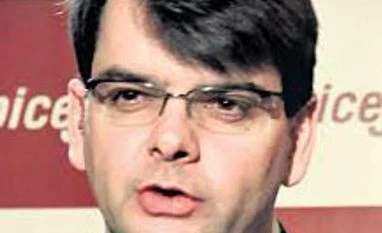 "People will fly if price is right: Neil Mills")


 Connect with us on WhatsApp