Possible to improve IBC with non-legislative fixes: ex-IBBI chief M S Sahoo

In a Q&A, Sahoo also calls for increasing the number of members in NCLT in order to expedite insolvency and bankruptcy cases
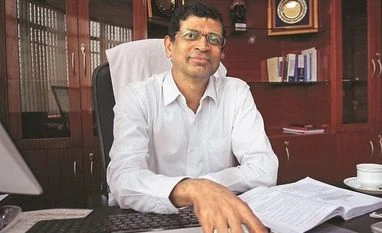
M S Sahoo, chairman of the IBBI, nsolvency and Bankruptcy Board of India
M S Sahoo, Distinguished Professor, National Law University, Delhi
Ruchika Chitravanshi New Delhi
4 min read Last Updated : Dec 12 2022 | 12:03 AM IST
The six-year-old Insolvency and Bankruptcy Code (IBC) may have undergone many changes, but amending the law may not be a solution for fixing problems with the code, M S Sahoo, Distinguished Professor, National Law University, Delhi says. In conversation with Ruchika Chitravanshi, the former chairman of the Insolvency and Bankruptcy Board of India says there is a lot of scope to improve the Code with non-legislative fixes. Excerpts:

There is a clamour for amendments to the IBC. The government seems to be considering changes in the upcoming budget session. Which areas do you think require changes?

Some believe every problem has a legislative fix and legislation is an end in itself. The law was amended by an Ordinance in April 2021 to allow prepack, which is yet to take off. Further, once legislation is made, vested interests try to frustrate its implementation, requiring further legislative fixes. It is possible to greatly enhance the outcomes of IBC with non-legislative fixes.

The measures that can greatly improve outcomes include: all concerned to play by the rule book, all concerned to adhere to timelines, concern for all stakeholders, switch from recovery to resolution mode, commercial wisdom to distinguish viable firms from the unviable, examine the feasibility and viability of resolution plans, non-interference in bonafide commercial wisdom, non-adversarial process, adequate adjudication capacity, a competitive market for distressed assets, etc. None of these require legislative fixes. They are, of course, necessary to provide for missing elements such as crossborder and group insolvency, and streamline the dysfunctional provisions such as those relating to avoidance transactions and fresh start process. More important is to ensure that legislation provides only the essentials, leaving the details to be provided through subordinate legislation, which can be modified quickly with evolving market environments.

What are some of the issues with the Code currently?

A larger part of the Code is yet to be implemented. Issues may surface when implemented, and then they need to be addressed. The Code provides for a fresh start process for individuals with limited means. The process as envisaged in the Code is, however, not implementable. The Insolvency Law Committee has proposed certain changes to the process to make it implementable. The provisions relating to this process could be amended and then implemented. This may give relief to millions of people.

The IBC aims to release entrepreneurs stuck in failed businesses, thereby promoting entrepreneurship. This benefit isn't really available as the provisions relating to insolvency resolution are yet to be implemented in respect of partnership and proprietorship firms, which are breeding grounds for entrepreneurs.

Statutory dues get a lower priority in the waterfall mechanism. Do you think there is need for a rethink?

I don’t think so, because it is a conscious policy of the government. However, there is scope for improving the entitlement of operational creditors (OCs), including government. OCs do not have a voice when the financial creditors (FCs) decide the fate of the company, including sharing of resolution proceeds among creditors. They need some assurance in lieu of their voice. The NCLAT has, recently in Excel Engineering, urged the Government and the IBBI, to consider entitlement for OCs, based on the amount realised in the resolution plan over and above the liquidation value (LV). This merits consideration. If the IBC process yields liquidation, both FCs and OCs would receive only LV as per waterfall. Let the LV be distributed vertically among FCs and OCs, according to the waterfall. Resolution proceeds in excess of the LV may be distributed horizontally among all creditors in proportion to their remaining claims.

How to reduce delays at the NCLT?

The simplest and quickest way is to increase the number of members. In the long run, it is necessary to have a specialised and unified Adjudicating Authority to deal with insolvency, liquidation, and bankruptcy processes of companies and individuals and the bench comprises one member. Simpler processes such as fresh start and voluntary liquidation, which do not entail major disputes, may be handled administratively.

Given the present state of affairs, how does the future of IBC look to you?

I am a great admirer of Victor Hugo and J M Keynes. I think IBC is an idea; it is about the ultimate economic freedom. Its time came in 2016 in India. The ideas encroach upon gradually as vested interests cede ground after fighting valiant battles. IBC is yielding some great outcomes today, and will do better tomorrow.

One subscription. Two world-class reads.

Already subscribed? Log in

Subscribe to read the full story →
*Subscribe to Business Standard digital and get complimentary access to The New York Times

Smart Quarterly

₹900

3 Months

₹300/Month

SAVE 25%

Smart Essential

₹2,700

1 Year

₹225/Month

SAVE 46%
*Complimentary New York Times access for the 2nd year will be given after 12 months

Super Saver

₹3,900

2 Years

₹162/Month

Subscribe

Renews automatically, cancel anytime

Here’s what’s included in our digital subscription plans

Exclusive premium stories online

  • Over 30 premium stories daily, handpicked by our editors

Complimentary Access to The New York Times

  • News, Games, Cooking, Audio, Wirecutter & The Athletic

Business Standard Epaper

  • Digital replica of our daily newspaper — with options to read, save, and share

Curated Newsletters

  • Insights on markets, finance, politics, tech, and more delivered to your inbox

Market Analysis & Investment Insights

  • In-depth market analysis & insights with access to The Smart Investor

Archives

  • Repository of articles and publications dating back to 1997

Ad-free Reading

  • Uninterrupted reading experience with no advertisements

Seamless Access Across All Devices

  • Access Business Standard across devices — mobile, tablet, or PC, via web or app

Topics :IBCInsolvency and Bankruptcy CodeM S SahooIBBINCLT

Next Story



