Will recover to pre-Covid levels only in FY22, says Somany Group

While for SHIL, 98 per cent of business comes directly from consumers, for HSIL, 30 per cent of the business is dependent on large institutional buyers like builders, hospitals, hotels, among others

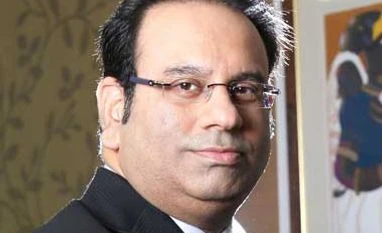
Sandip Somany
The Rs 3,500-crore group is expected to take a hit of 15 per cent on its last year top line number.
Arnab Dutta New Delhi,
2 min read Last Updated : Aug 27 2020 | 10:30 PM IST
With the Covid-19 pandemic continuing to spread in India, Kolkata-based Somany Group is expecting full recovery in business to pre-Covid levels — but not before the next financial year. The group is banking on the momentum, so far, witnessed in the non-metro markets.

According to Sandip Somany, director at the group’s holding entity Somany Impresa, after the stringent nationwide lockdowns that crippled businesses, continuing localised lockdowns are now the biggest barrier in the road to recovery. Moreover, a faltering hotel industry and uncertainty in the overall job market have further impacted businesses.

The green shoots, however, are found in the smaller towns. “In the retail segment, the large metropolitan towns are weak, but the semi-urban areas are doing well — resulting in year-on-year growth. Further, interest rates have been coming down quite sharply, and as a consequence, equated monthly instalments (for housing) have come down quite significantly,” says Somany.

Serious players — both buyers and sellers — and not speculators are now driving the business.


The Rs 3,500-crore group is expected to take a hit of 15 per cent on its last year top line number. Two of the largest group entities — Hindustan Sanitaryware & Industries (HSIL) and Somany Home Innovation (SHIL) — raked in Rs 1,859 crore and Rs 1,613 crore, respectively. Its 10 manufacturing plants are already back to 80 per cent of pre-Covid levels. But a full recovery may not happen this year.

While for SHIL, 98 per cent of business comes directly from consumers, for HSIL, 30 per cent of the business is dependent on large institutional buyers like builders, hospitals, hotels, among others.

To stay prepared for normal demand levels, the group is chalking out investment plans in expanding capacity and plans to finalise them at its next board meeting. “To continue the high growth rate, we will need to invest more in expanding plant capacity,” says Somany.

One subscription. Two world-class reads.

Already subscribed? Log in

Subscribe to read the full story →
*Subscribe to Business Standard digital and get complimentary access to The New York Times

Smart Quarterly

₹900

3 Months

₹300/Month

SAVE 25%

Smart Essential

₹2,700

1 Year

₹225/Month

SAVE 46%
*Complimentary New York Times access for the 2nd year will be given after 12 months

Super Saver

₹3,900

2 Years

₹162/Month

Subscribe

Renews automatically, cancel anytime

Here’s what’s included in our digital subscription plans

Exclusive premium stories online

  • Over 30 premium stories daily, handpicked by our editors

Complimentary Access to The New York Times

  • News, Games, Cooking, Audio, Wirecutter & The Athletic

Business Standard Epaper

  • Digital replica of our daily newspaper — with options to read, save, and share

Curated Newsletters

  • Insights on markets, finance, politics, tech, and more delivered to your inbox

Market Analysis & Investment Insights

  • In-depth market analysis & insights with access to The Smart Investor

Archives

  • Repository of articles and publications dating back to 1997

Ad-free Reading

  • Uninterrupted reading experience with no advertisements

Seamless Access Across All Devices

  • Access Business Standard across devices — mobile, tablet, or PC, via web or app

Topics :CoronavirusLockdownSomany Ceramics

Next Story