Pricing power returns for paper makers on costlier imports

A higher price for wood pulp globally has had a big role in making imported paper costlier
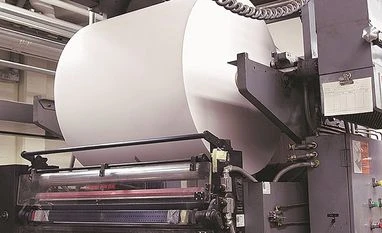
paper
paper
Rajesh Bhayani Mumbai
Last Updated : Mar 09 2017 | 12:46 AM IST
Since January, most paper companies have raised prices at least twice, believing demand-supply balance will return and imports will get costlier. Prices of most varieties have gone up by three to four per cent; over a year, by eight per cent, on average.

A higher price for wood pulp globally has had a big role in making imported paper costlier. The price has risen in three months by about 20 per cent, to around $600 a tonne. Said an official from a top-grade mill, “Indian companies are less dependent on imported wood pulp; they have their own domestic arrangement.”

Most paper companies did well in the December quarter, on revenue and profit. Expectations are higher for the March quarter; with the demand season for education books also having started. And, more increase is expected in the price of imported paper.

Since October, the index of paper companies’ share price has outperformed the benchmark Sensex on the BSE exchange. Sensex on base of 100 in October risen 104 points while paper companies index compiled by Business Standard went up to 126 points. “Paper companies have seen good growth following supply disruption from a large mill. With pricing power coming back, revenues and margins are likely to improve further. Low power cost is helping,” said Deven Choksey, managing director of KR Choksey Shares and Securities.


Shamji Karia, president, Federation of Paper Traders Association, said the price of imported products has risen in recent months by around $100 a tonne. “Exporters have indicated the price rise for the next consignments could be around $40 a tonne,” Karia said.

Further, Karia said, “Pulp use has been systematically reduced here (India). Cutting is less than the plantation done. the proportion of wood pulp (in the final product) is only 20-22 per cent, while 49 per cent is waste recycled paper and 28 per cent is from agro waste and bagasse. We will be launching a campaign along with mills to popularise paper packaging, which is biodegradable.”

One subscription. Two world-class reads.

Already subscribed? Log in

Subscribe to read the full story →
*Subscribe to Business Standard digital and get complimentary access to The New York Times

Smart Quarterly

₹900

3 Months

₹300/Month

SAVE 25%

Smart Essential

₹2,700

1 Year

₹225/Month

SAVE 46%
*Complimentary New York Times access for the 2nd year will be given after 12 months

Super Saver

₹3,900

2 Years

₹162/Month

Subscribe

Renews automatically, cancel anytime

Here’s what’s included in our digital subscription plans

Exclusive premium stories online

  • Over 30 premium stories daily, handpicked by our editors

Complimentary Access to The New York Times

  • News, Games, Cooking, Audio, Wirecutter & The Athletic

Business Standard Epaper

  • Digital replica of our daily newspaper — with options to read, save, and share

Curated Newsletters

  • Insights on markets, finance, politics, tech, and more delivered to your inbox

Market Analysis & Investment Insights

  • In-depth market analysis & insights with access to The Smart Investor

Archives

  • Repository of articles and publications dating back to 1997

Ad-free Reading

  • Uninterrupted reading experience with no advertisements

Seamless Access Across All Devices

  • Access Business Standard across devices — mobile, tablet, or PC, via web or app

Next Story



