Tata Sons Chairman Emeritus Ratan Tata is set to have the greatest say in case the company defaults on dividend payment to shareholders for two years or more.
Under the new structure approved by the company’s shareholders at its annual general meeting (AGM) on Thursday, Tata Sons’ preferential shareholders would now have voting rights if the company defaults on dividend payments. As of December 2016, Ratan Tata was the largest holder of preference shares (35.6 per cent). He was also the biggest individual holder of equity and preference shares combined (31.43 per cent).
With Tata Sons shareholders voting in favour of going private, there are going to be some significant structural changes. Aside from preferential shareholders getting voting rights in the event of a default, the Tata group holding company, headed by N Chandrasekaran, would not need to make as many disclosures, unlike earlier.
Tata Trusts and Tata group companies hold nearly 79 per cent equity stake in Tata Sons, with individual investors, including the Tata family, holding the rest of the equity.
Ratan Tata had last year invested Rs 105 crore to buy 1.05 million preference shares with a face value of Rs 1,000 each in Tata Sons. According to shareholding data from the annual report, while he is the largest shareholder of preference shares, two Tata Trusts — Jamshetji Tata Trust and Navajibai Ratan Tata Trust — have reduced their exposure from 39.5 million preference shares a year earlier to zero as of March 2017.
Other top preference shareholders are Ambuja Cements founder and former chairman Narotam Sekhsaria and former Tata Sons director Noshir Soonawala.
Under the Companies Act, in the event of a default by Tata Sons on the payment of preference dividend for two years or more, the voting rights of Ratan Tata would go up to 31.43 per cent from 0.83 per cent, as the preference and equity capital would be considered together.
According to a corporate lawyer, a default by Tata Sons is remote as it can always sell shares in companies like Tata Consultancy Services, where it owns nearly 74 per cent to pay a dividend on preference shares.
The net profit of Tata Sons declined by 72.4 per cent to Rs 824 crore in the financial year 2016-17 from previous year’s Rs 3,013 crore. This was mainly due to the company making provisions for damages of Rs 4,716 crore for NTT DoCoMo exercising its put option on its 26 per cent stake in Tata Teleservices. Tata Sons had to deposit Rs 8,000 crore ($1.2 billion) with the Delhi High Court to honour its commitment to buy back shares from DoCoMo.
The company’s revenues were up 23.2 per cent to Rs 9,984 crore from Rs 8,104 crore, boosted by “other income” of Rs 2,169 crore for sale of its 24 per cent stake in its insurance venture, Tata AIA Insurance.
Tata Teleservices’ financial health is in a precarious situation (as it posted a negative net-worth of Rs 12,000 crore on Rs 29,000 crore of debt), and could impact Tata Sons’ financials adversely if it decides to exit telecom.

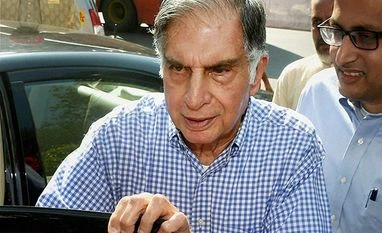 "Ratan Tata to have loudest voice if Tata Sons defaults on dividend payouts")











