Reliance Communication (RCom), part of the Anil Ambani group, is under renewed pressure on Dalal Street over its financial health. RCom’s market cap declined by 48 per cent from Rs 12,444.9 crore at the end of March 2016 to Rs 6,458.9 crore on May 25, 2017.
The stock is down 21 per cent in two weeks on the BSE exchange, after credit downgrades by domestic rating agencies. In the period, the Bharti Airtel stock price was flat (up one per cent), while Idea Cellular was down 13 per cent; the benchmark Sensex was up 1.7 per cent.
Early this week, CARE downgraded RCom from the earlier A- to BB. And, said it would be on a credit watch, citing the operational risk in view of the growing pricing pressure in the sector. The agency says the high debt level at RCom, coupled with lower cash accrual and imminent repayment obligations, had increased the financial risk.
This followed a similar downgrade by rating agency ICRA early this month. It had downgraded the long-term rating to BB, from BBB, and reaffirmed its earlier negative outlook. ICRA said the revision took into account the persisting pressures and weakening outlook on revenue generation and profit at the group, given the heightened competition in the industry.
Rating agencies and investors’ worry stems from a continued deterioration in financial ratios due to falling profitability and steadily rising interest obligations and gross debt. RCom’s operating profit on a consolidated basis was down 23.5 per cent during the first nine months of FY17 to Rs 4,308 crore; interest obligations were up 21 per cent to Rs 2,578 crore. As a result, the interest coverage ratio (ICR) declined to a record low of 1.7 in FY17. Analysts say the company might not be able to service interest payments if there is a further decline in operating profit in the coming quarters.
The ICR had declined to a dangerous 1.25 during the December 2016 quarter, as operating profit was down 38 per cent on a year-on-year basis; interest payments were up 37 per cent and it reported a net loss of Rs 531 crore.
Consolidated gross debt was up 19 per cent over a year in FY16 as it made new investments in spectrum and network equipment to roll out fourth-generation technology (4G) operations. The debt seems to have grown in FY17, given the 20 per cent rise in interest obligations during the first nine months of FY17. The company is yet to declare its final quarter results. At its current level, RCom’s gross debt is nearly eight times its operating profit. This makes it tough repay debt through internal accrual. The corresponding ratios for Bharti Airtel and Idea Cellular are around 3.0 and 5.0, respectively.
RCom cannot use the equity market to retire some of its debt either, given its record low market capitalisation. At its current stock price, the market cap is only a seventh (13.6 per cent) of its gross debt. The corresponding ratios for Airtel and Idea are 144 per cent and 55 per cent, respectively.
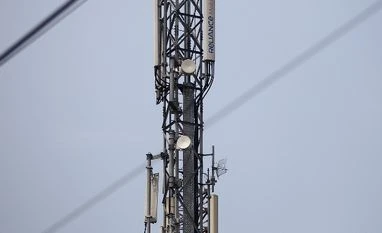
Lenders’ hope now rests on the company’s plan to sell its telecom tower assets to Canada's Brookfield’s for around Rs 11,000 crore. The deal is, however, contingent on the planned merger of RCom with Aircel, pending approval from the SC.
A company statement to the stock exchanges says half-yearly interest to bondholders was paid on the due date of May 8. Insiders said RCom's merger proposal with Aircel is currently depending on a case filed against Aircel promoters in the Supreme Court. Till the court does not dispose off the case, the sale of telecom towers to Canadian fund Brookfield will also remain pending.

 "Reliance Communications under bear attack, stock down 21% in two weeks")












 Connect with us on WhatsApp