Mukesh Ambani announced a thrust into green energy, and the launch of a new affordable smartphone at the 44th annual general meeting (AGM) of Reliance Industries. He also inducted the Saudi Aramco and PIF boss, Yasir Al-Rumayyan, on the board. There was more good news in that the partnership with BP is producing gas from KG-D6 basin. Aside from that, RIL will continue to expand its retail footprint and Jio Platforms will continue its push into 5G.
The oil-to-chemical (O2C) division receives a big 'moral' boost from the induction of a Saudi Aramco representative since this indicates concrete developments in the alliance with Aramco announced two years ago. The connection to the Saudi sovereign wealth fund is worth noting.
The Exploration & Production (E&P) division should start generating significant revenues again. Production from the three deep gas wells (two of which are already operational) will generate enough gas to meet roughly 20 per cent of India’s domestic gas demand.
The 'New Energy' initiative will revolve around the creation of four “gigafactories”. This will together entail Rs 60,000 crore in investments over the next three years. These will produce solar PV panels, battery and storage solutions, electrolysers for the production of green hydrogen, and fuel cells to convert said hydrogen into energy.
These are all high tech areas. There have been continuous innovation breakthroughs. The New Energy division’s gigafactories should add scale. The details are not clear, however. Technology induction and the ability to scale up viably will be crucial to meet the typically ambitious targets.
The planned investments do not seem excessive. RIL has raised over Rs 3.25 trillion in the past fiscal alone so it will be able to fund this even though it is cash flow negative. It will need to invest less in the telecom venture in the near future, since it has picked up the spectrum it needs, investing around Rs 72,000 cr in spectrum and network infrastructure in FY21.
The New Energy move is consistent with the RIL philosophy of ploughing profits back into expansion. Ambani indicated the group is looking at investments of $200 billion across all divisions in the next decade, as well as being net carbon zero by 2035.
The smartphone launch in conjunction with Google happens on September 10 (Ganesh Chaturthi). Details like price-points are lacking at the moment. The JioPhone Next will have a stripped-down Android OS. It will target 200 million-plus 2G subscribers (mainly on Voda-Idea and BSNL networks) who have not yet migrated to smartphones. This is a low ARPU segment – much lower than current Jio ARPU of Rs 138. But Ambani indicated Jio has the spare capacity to absorb 200 million new users into its existing network so it would utilise extant capacity.
The Reliance Retail division is already dominant in organised retail, holding 6x the market share of the next largest player. Expansion will continue. The Jiomart model of pulling in local retail partners has apparently been successful. There was no reference to the Future deal, which is mired in legal dispute. But Ambani did mention RIL is open to expanding the retail footprint through acquisitions. The retail division targets expansion of 3x in the next five years.
Jio and Retail produced over 50 per cent of operating profits (EBITDA) in 2020-21, with various segments growing at close to 40 per cent. This balanced off a tough year for O2C, which saw 30 per cent drop in EBITDA.
O2C will always be cyclical. The last fiscal was hit by demand destruction (first half) and rising crude and gas prices. E&P coming back on track with KG-D6 production will counter higher input prices to some extent. But cyclicality is inherent. The major growth areas will be digital, retail and green energy.
Devangshu Datta is an independent market analyst. Views are his own.

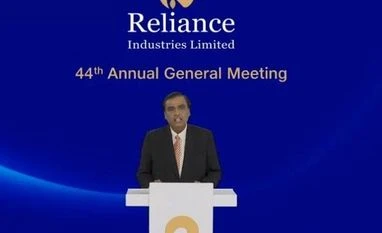 "RIL's investment plans laid out at 44th AGM don't seem excessive")












