Jindal Steel and Power’s (JSPL) March quarter performance was driven by growth in the domestic steel business. Rising volumes, led by higher steel capacities, aided the segment. This, coupled with an improvement in the power segment outlook, is a positive as it could result in better cash flows.
JSPL’s stand-alone steel sales rose 24 per cent sequentially and 20 per cent year-on-year (YoY) to 1.51 million tonnes (mt), in March (Q4).
This helped consolidated sales increase 18.1 per cent YoY. However, due to weak realisations, per-tonne profitability came in at Rs 9,931, against the estimated Rs 10,000-11,000. Oman steel operations also saw softer margins, while higher coal prices for the power business impacted overall profitability.
The bottom line was hit by the write-off of Rs 1,734 crore pertaining to additional coal penalty, electricity duty dispute, and a gas plant in Odisha, along with an impairment of Rs 1,290 crore of assets following the shutdown of Wongawalli mine (Australia).
The company, hence, reported a loss of Rs 2,713 crore. However, analysts say a major part of the one-offs were related to previous years and were non-cash in nature. Though steel realisation may see volatility going ahead, rising volumes are expected to offset the impact.
The firm expects 6.5 mt in steel volumes for FY20, up 27 per cent YoY from 5.1 mt. Analysts at Kotak Institutional Equities and Motilal Oswal Securities see volume growth of 14-22 per cent in FY20. The expansion at JSPL’s Angul plant led to an exit capacity rate of 6 mt per annum for domestic steel operations in Q4.
Outlook for the power business, which has remained weak in the absence of adequate power purchase agreements (PPA), may improve. The company remains the lowest bidder for 515 Mw, and is well-placed in the upcoming 3,000 Mw tender by Gujarat, given its proximity to coal mines, say analysts.
Motilal Oswal analysts have tweaked profit estimates (10-12 per cent for FY20-21), on lower margins in Oman and higher power cost. However, they add that with major capex now behind, free cash flow generation should continue and aid debt reduction of Rs 4,800 crore over the next two years.

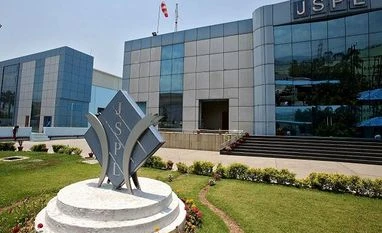 "Rising steel volumes, improvement in power segment to aid JSPL's cash flows")












