
Rohan Lifescapes to launch Rs 2k-cr Borivali redevelopment project shortly
Rohan Lifescapes has so far delivered 28 projects worth 6.5 million sqft of quality space, impacting 5,000 original families in them
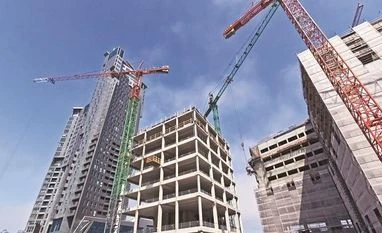 "Rohan Lifescapes to launch Rs 2k-cr Borivali redevelopment project shortly")
WebinarsNew
Deep DiveNew
Explore Business Standard
Rohan Lifescapes has so far delivered 28 projects worth 6.5 million sqft of quality space, impacting 5,000 original families in them
Rohan Lifescapes, the largest re-developer of cessed buildings in the megapolis, is launching its biggest project in the northern suburb of Borivali on a six-acre plot which has a revenue potential of over Rs 2,000 crore.
Rohan Lifescapes was founded by first-generation entrepreneur Harresh Mehta in 1996, and has so far delivered 28 projects worth 6.5 million sqft of quality space, impacting 5,000 original families in them.
The company has nine ongoing projects which will have around 8 million sqft of developed area, and seven upcoming launches with over 10 million sqft of saleable area, on completion, and the Borivali project is its biggest bet ever with over 25,000 sqm of saleable space, Mehta said, adding the company is sitting on a land bank of over 50 sites in prime localities.
Some of its upcoming projects include Hughes Road, Malabar Hill & Chowpatty near the Nariman Point commercial hub. "The Borivali project is our biggest ever, and has a revenue potential of over Rs 2,000 crore. We have all the clearances in place and the project will be launched over the next six months," Mehta said.
Spread across six acres, on completion it will have around 1,000 units for commercial sale, with the rest going to original owners who will get 500 sqft of developed space, Mehta told PTI.
On the Hughes Road project (behind the Wilson College in south Mumbai), he said the 50-story tower, which was initially meant to be the tallest tower in the city at 90 floors, could not get the aviation regulator DGCA nod and thus scaled back and stalled for years. The project on 1400-sqm plot will have one unit each floor from the 30th floor for commercial sale at a price of Rs 12 crore or more per unit.
Mehta said this project will be launched in mid-2023 and will have a revenue potential of around Rs 600 crore.
Cessed buildings are those very old buildings that at some point in time have paid a repair cess to the state government hoping that when the time comes, the government will utilise this fund to repair those buildings.
This is a sort of insurance for the occupants of such buildings. But as more and more buildings deteriorated, the government found it difficult to maintain and repair them with this meager cess collected, hence the redevelopment scheme was introduced in 1991 to allow private developers to rebuild these buildings by providing them with additional FSI over and above the zonal FSI.
Such cessed buildings exist only in south Mumbai--from the southernmost tip of Malabar Hill and up to Dadar in the central region. But three decades later, data suggest that the scheme has not met with the desired success and the scheme operates only in the lucrative south Mumbai market now, he said.
(Only the headline and picture of this report may have been reworked by the Business Standard staff; the rest of the content is auto-generated from a syndicated feed.)
First Published: Apr 08 2022 | 8:51 PM IST


 Connect with us on WhatsApp