Rural demand for fast-moving consumer goods (FMCGs) has been weak in the October-December quarter (Q3 of FY22) than in the same period last financial year due to high inflation, coupled with the base effect of Q3 FY21, when the growth rate was high.
Some other reasons are the erratic monsoon, which has affected the kharif crop (potential impact on farm incomes), and the spread of coronavirus.
“Demand has been slow in rural areas as the repatriation of funds from urban to rural has not happened. Also, the psychological impact of Covid has hurt spending in rural India, which, along with higher prices of goods, could have had an impact on rural demand,” Angshu Mallick, chief executive officer at Adani Wilmar, told Business Standard.
He estimates rural sales to be lower by 8-10 per cent than in the same time last year.
In Mallick’s view rural demand is better after the harvesting of the kharif crop, which was not seen this time.
In the same vein, a senior insurance executive said this kharif season crop insurance claims increased due to unseasonal rain in western parts of the country.
“Value-wise, the claims amount may not have been very large but certainly in terms of volume the percentage increase was significant against last year’s,” the executive said, adding that unseasonal rain had led to crop damage.
Mayank Shah, category head, Parle Products, said rural demand grew phenomenally last year, due to which the base was higher. “Rural growth is low compared to last year. Urban markets in comparison have a lot more catch-up to do,” Shah said.
Then there is also an impact of the festive season, say experts watching the retail industry. “FMCG sales saw steady growth (mid-single digits) month-on-month across both urban and rural India in October as kiranas stocked up for Diwali. In November rural sales dropped due to overstocking for Diwali,” Akshay D’Souza, chief growth and insight officer, Bizom, a retail intelligence platform.
Industry players said the fear of Omicron impacting future demand was among the reasons holding the channel/trade to stock up inventories. Vimal Pande, CEO of Vi-John Group, the maker of shaving creams, said there had been an impact in December rather than in October and November, when demand was strong. In December the channel has not been stocking up out of fear that demand may not be as buoyant due to Covid.
On November 30, Nielsen IQ said rural demand witnessed a slowdown due to a consumption decline in the quarter ended September with value growth at 9.4 per cent, which was largely led by price increases. In the same period, volumes contracted 2.9 per cent due to a lower consumption of items like cooking oil, packaged groceries, hot beverages, and fabric care.

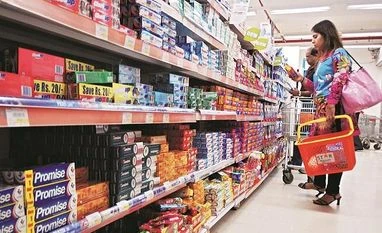 "Rural demand for FMCG products impacted in Q3 due to high inflation")












