Slowing house sales in major cities such as Mumbai and Delhi notwithstanding, growth in residential transactions in satellite towns such as Greater Noida and tier-II and tier-III cities show a different picture.
Earnings of India’s largest mortgage lender, HDFC, and Asian Paints for the September quarter reflect this trend. HDFC said its loans to individual borrowers rose 29 per cent compared to the year-ago period, primarily due to demand from smaller cities. Asian Paints, which saw a 37 per cent jump in net profit, said its volume growth was primarily aided by growth in tier-II and tier-III cities.
“Our lending is more to middle-income people, more in the outskirts of big cities or in tier-II and tier-III cities, where the growth is still reasonably good,” said HDFC chief executive Keki Mistry.
| DEVELOPMENT IN THE FRINGES |
- Earnings of India's largest mortgage lender, HDFC, and Asian Paints for the September quarter show realty transactions are growing in satellite towns. HDFC said its loans to individual borrowers rose 29% compared to the year-ago period, primarily due to demand from smaller cities. Asian Paints, which saw a 37% jump in net profit, said its volume growth was primarily aided by growth in tier-II and tier-III cities
- Developers say metros are seeing less traction due to high prices
- According to data from by realty research firm PropEquity, at 9,823 units, Greater Noida saw a 2.3 times jump in absorption in June-Aug 2013, compared with 4,136 units in the corresponding period last year. In the same period, launches nearly doubled - 15,508 units, against 7,871 units a year ago
- Knight Frank says absorption in cities such as Mumbai fell 32% in the first half of this year. However, Bangalore saw a rise of 22%. At 36%, Bangalore's peripheral areas such as Whitefield, Sarjapur Road, Bannerghatta Road and Electronic City contributed the most to the launches in the city
|
Asian Paints Managing Director and chief executive K B S Anand said, “The decorative paints business in India fared very well and registered double-digit volume growth. Good growth was witnessed across geographies, especially in tier-II and tier-III cities.”
Samantak Das, chief economist and director (research and advisory services), Knight Frank, says satellite towns such as Greater Noida are defying the slowdown. “We have seen an up-tick in sales in Greater Noida in the National Capital Region (NCR), as well as in Bangalore, in the last two-three quarters. If any suburb is seeing high growth and absorption, housing finance companies would definitely focus on capturing that growth,” Das said.
According to data from by realty research firm PropEquity, at 9,823 units, Greater Noida saw a 2.3 times jump in absorption in June-August 2013, compared with 4,136 units in the corresponding period last year. During the same period, launches nearly doubled — 15,508 units, against 7,871 units in the year-ago period.
Knight Frank says while absorption in cities such as Mumbai fell 32 per cent in the first half of this year, Bangalore saw a rise of 22 per cent. The city recorded the launch of 28,000 units in the first half of 2013, a 33 per cent rise compared to the first half of 2012. At 36 per cent, Bangalore’s peripheral areas such as Whitefield, Sarjapur Road, Bannerghatta Road and Electronic City contributed the most to the launches in Bangalore.
“The entire NCR is showing a plummeting trend in supply, while demand is moving up” said Knight Frank’s Das.
Developers say metros are seeing less traction due to high prices. “Land prices in metros and super-metros are very high, and this has pushed up per-sq-ft prices. That’s why people are investing in other places,” said Rajeev Talwar, executive director, DLF.
A recent Goldman Sachs report said average house prices in Mumbai rose 49 per cent since March 2010, against the national average increase of 41 per cent.
Knight Frank says Mumbai remains the country’s most expensive real estate market, with 29 per cent of the city’s under-construction units surpassing the Rs 1 crore-mark, compared with 11 per cent and five per cent for NCR and Bangalore, respectively. In the first half of this year, about 44 per cent of the projects launched in Bangalore were in the price bracket of Rs 25-30 lakh; nine per cent catered to sub-Rs 25 lakh price range.
Irfan Razack, chairman and managing director of Bangalore-based Prestige Estates, says, “As of today, sales are happening in the market’s mid-segment. The moment the affordability barrier is crossed, stress comes in…Not everybody can buy houses for Rs 5 crore or Rs 6 crore.”
Prestige Estates sold 1,105 units, or 1.83 million sq ft of properties, amounting to Rs 1,068.5 crore in the September quarter, a rise of 31 per cent against the corresponding period last year.
Das says, “Houses in tier-II and tier-III cities are positioned as affordable. If you do that in Mumbai, sales velocity would improve.” Adding to the draw of Bangalore and NCR was the metro rail connectivity in these areas, he added.
“Tier-II and tier-III cities are dependent on agriculture and industry, and their economy hasn’t been impacted as was the case with big cities, owing to the slowdown,” said Sunil Rohokale, chief executive and managing director of asset management company ASK Investment Holdings.

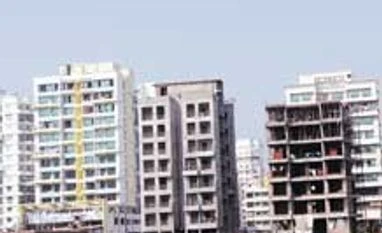 "Small cities, satellite towns defy realty slowdown")


 Connect with us on WhatsApp