Credit penetration in the two-wheeler segment is set to rise at a rapid pace as an increase in the cost of ownership is prompting more buyers to opt for loans.
Amid a poor demand pull and a sales push, the percentage of those who have chosen to get the two-wheeler purchase financed has seen a sharp quarter-on-quarter increase in the September quarter (Q2) and is only set to go up, said company executives and analysts. In Q2, the average credit penetration at two-wheeler makers Hero MotoCorp, Bajaj Auto, and TVS Motor rose 500 basis points to 54.3 per cent from 49.3 per cent in the June quarter.
While market leader Hero MotoCorp saw the highest jump — 46 per cent in Q2 from 37 per cent in Q2, 70 per cent buyers of Bajaj Auto motorcycles took credit. For TVS Motor, the percentage remained almost unchanged — 47 per cent from 46 per cent. “This is not only a seasonal spike but also year-on-improvement given the focus on financing,” Niranjan Gupta, chief financial officer at Hero MotopCorp, told analysts after the Q2 earnings. Attractive finance schemes with features such as zero down payments and low equated monthly instalments, among others, have become an important marketing tool for companies in a weak market.
Ahead of the festive season, all companies doled out attractive offers to woo buyers. Sales in world’s largest scooter and motorcycle market have been skidding for over six months on poor economic growth. The despatches to dealers in the domestic market saw a 16 per cent year-on-year decline to 9.6 million units in the first half of this financial year, according to the Society of Indian Automobile Manufacturers Association.
A liquidity crunch triggered by the ILF&S crisis also sapped demand, prompting captive finance arms of companies to fill in the void that was created by the non-captive NBFCs. The overall credit penetration in the two-wheeler segment has risen to 40 per cent in the past five years from 30 per cent.
Within that, the share of captive finance arms TVS Capital, Bajaj Finance, and Hero FinCorp, among others, have risen to 32 per cent in March 2019 from 28 per cent in 2014, according to ICRA’s estimates. Analysts attribute the rising penetration of credit in the two-wheeler segment to the captive finance arms of the manufacturers stepping up presence. An increase in the cost of ownership is also fuelling the trend, they add.
“OEM (original equipment manufacturers) financiers and other NBFCs operating in the retail finance segment are increasing their focus on two-wheeler financing because of the low ticket sizes, tenures, and better pricing flexibility, which the product inherently offers,” said AM Karthik, vice-president (sector head, corporate ratings) at ICRA. This, he points out, augurs well, given the prevailing debt market conditions.
The increase in the cost of ownership has also resulted in higher reliance on credit, he adds.
Miren Lodha, director of CRISIL Research, points out that the increase in ownership costs has been led by the change in insurance regulation, which requires buyers to pay an insurance premium for three years, instead of one, at the time of purchase.
“This could also be attributed to increased finance penetration,” he says, adding that the mandatory switch to vehicles compliant with BSVI norms from April 2020 would increase the cost of vehicle. This could result in more people opting for credit.
While it is premature to say whether the finance push will enable companies to ride out the slowdown in a sustainable way, it has helped them in wooing buyers in the recently concluded festive season.

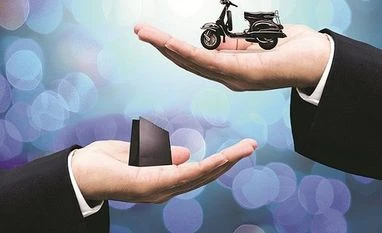 "Slowdown blues: As costs spiral, two-wheeler buyers take the credit route")











