Solar power tariff touches new low of Rs 5.05
Mauritius-based Sky Power beats sector majors in Madhya Pradesh
Jyoti MukulShreya Jai New Delhi Mauritius-based SkyPower Southeast Asia Holdings has offered a tariff of Rs 5.051 a unit to the state government-owned MP Power Management Company, setting a new record low price in solar power generation.
The offered price is without any subsidy and is lower than the Rs 5.50 tariff under viability gap funding, raising questions on the need to subsidise solar power.
The offered price is without any subsidy component and is lower than even Rs 5.50 rate under the viability gap funding, putting a question mark on the need to have subsidy in solar tariffs, Manu Srivastava, principal secretary, new and renewable energy, in the Madhya Pradesh government told Business Standard.
Offers for sale of 300 Mw of solar power were opened after a third round of bidding in Madhya Pradesh on Wednesday. The highest rate of procurement was Rs 5.641 for 50 Mw from Hero Solar, Srivastava said. SkyPower set a record by beating majors like Reliance, Adani, ACME and Welspun.
A record 100 companies had offered 3,744 Mw to the state, though bids were accepted for 312 Mw. Power supply under the 25-year contract will begin in 18 months. SkyPower offered 50 Mw for Rs 5.051, another 50 Mw for Rs 5.10, and a similar volume at Rs 5.29. Its lowest offer was about 22 per cent lower than Madhya Pradesh’s own record of Rs 6.47 last year. Prior to that in 2012, it had received offers ranging between Rs 7.90 and Rs 8.05 a unit.
The viability of solar power generation is being questioned because of the low-paying capacity of distribution companies. Compared to diesel power, solar energy is, however, cheaper. In 2013, the cost of electricity generated by conventional sources like diesel was around Rs 16 a unit while solar electricity was Rs 8-10. Solar tariffs have since declined to around Rs 6.50-8.50 a unit, though they are still higher than coal-based power, which averages around Rs 4 a unit.
The fall in tariffs is primarily due to aggressive bidding, raising hopes of solar energy reaching grid parity. Gaetan Tiberghien, principal investment officer, infrastructure and natural resources, International Finance Corporation, South Asia, earlier told Business Standard, companies were able to bid aggressively because of a rapid decline in costs.
“Bidders have been lucky as they have been able to take the benefit of a fall in costs. But that might not be the case anymore, as costs in solar have stabilised and it could be risky to put in aggressive bids,” he had said.
In the Madhya Pradesh auction, Kolkata-based Narbheram Vishram offered 20 Mw for Rs 5.38 a unit and 10 Mw for Rs 5.39. Small players like Narendra Kumar Khanna, Made Easy Education and Fluid Con Engineers managed to sell capacity. Rays Power, Renew Solar Power and Hero Solar Energy scraped through with offers ranging from Rs 5.4 to Rs 5.6 a unit.
US company First Solar had last October bid Rs 5.25 and Rs 5.35, respectively, for two 40 Mw projects in Andhra Pradesh. That was the country’s lowest bid till then. However, First Solar was allowed a 10 per cent escalation in the price after the first year.
Before that in 2013, Rajasthan received the lowest bid of Rs 6.45. Since then, the central government’s fourth tranche of projects under the National Solar Mission were capped at Rs 5.5 per unit with viability gap funding of Rs 2 lakh per unit.

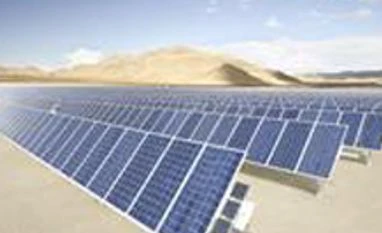 "Solar power tariff touches new low of Rs 5.05")


 Connect with us on WhatsApp