Suzlon Energy awaits shareholder approval for a third bailout package

The new lenders are bailing out the company by infusing additional funds and converting their loans worth Rs 4,100 crore into equity
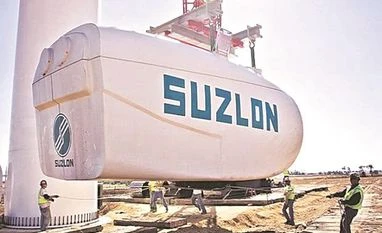
Suzlon
Suzlon’s lenders may struggle to find a willing buyer as market condi­tions for wind energy remain unfavo­urable
Dev Chatterjee Mumbai
6 min read Last Updated : Mar 23 2022 | 6:10 AM IST
Shareholders of Suzlon Energy will be voting on Friday to offer a stake to a new consortium of lenders including power infrastructure finance company REC and Indian Ren­ewable Energy Development Agency. This would see the promoters’ stake falling to a record low of 13 per cent, and lenders increasing their stake to 34.5 per cent in the company.

The new lenders are bailing out the company by infusing additional funds and converting their loans worth Rs 4,100 crore into equity.

Suzlon Energy, which had a market value of Rs 8,741 crore as on Monday, sought a bailout package from its len­ders after the company defaulted on its loans in 2018 despite generous bailouts by the lenders in the past.

Suzlon Industries, promoted by Tul­si Tanti in 1995, started as a fully-integrated wind power solution provider. But despite the world moving towards renewable power, the company has failed to capitalise on the green energy revolution.

This is not the first time Suzlon is seeking a bailout from banks. In 2013, Suzlon and its subsidiaries were refer­red to the Corporate Debt Restruct­uring (CDR) cell with the management promising a potential turnaround in the wind energy sector. The package was approved by the lenders and imp­lemented by March 28, 2013.


In February 2015, Dilip Shanghvi, billionaire promoter of Sun Pharma­c­e­u­tical Industries, announced plans to acquire a 23 per cent stake in his perso­nal capacity for Rs 1,800 crore in Suzlon Energy. The company also sold one of its overseas subsidiaries, Senvion SE, in January 2015 for €1 billion to meet CDR targets.

But by fiscal 2018, the company started making losses again, with debt hovering at Rs 12,000 crore level (see chart). Group operating revenues dec­lined 31 per cent in FY18 to Rs 8,170 crore from Rs 11,938 crore in FY17. This was mainly on account of a sharp decline in electricity generation volume to 1,173 Mw in FY18 from 1,573 Mw in fiscal 2017. Not surprisingly, the company missed all the targets set in the CDR.

High debt was the key cause for Suz­lon’s financial misfortune but that was a symptom of the undeveloped nature of the wind power market in India. “As a key early leader in the Indian wind sector, Suzlon’s own mistakes, particularly in terms of excessive reliance on financial leverage, have been compounded by the lack of sustained support and order flow to allow Suzlon’s factories to operate anywhere near a viable rate in the last three or four years,” said Tim Buckley, director of Climate Energy Finance, of Sydney.

External factors also added to the company's woes. Wind requires turbine manufacturing facilities to be largely located within the country, but running factories at just 10-20 per cent of capacity for several years has created a massive under-utilisation problem for the industry, Buckley pointed out.

“Having built capacity ahead of de­m­and, in the expectation of a strong su­pportive government policy to drive low cost, domestic zero emissions in­v­e­s­tment in wind infrastructure projec­ts, this has been a major failure of policy delivery, a major missed opportunity for India, particularly now that electri­city demand is growing strongly again, and fossil fuel import prices have risen five- to tenfold over the last two years.”

As a result, “sustainable economic growth and energy security in India have been set back materially due to this failure to translate clear, positive long-term energy targets into credible investment signals to unlock investm­ent and investor confidence,” he said.

So how did Suzlon avoid the bankruptcy courts? “While most defaulting companies were sent to the bankruptcy courts for debt resolutions, the lenders spared the rod for Suzlon. With Covid disrupting companies the world over, Suzlon sent a fresh application to the banks for refinancing of older loans,” said a banker requesting anonymity.

Under the new refinancing plan, the company would be repaying part of the lender’s older debt by taking a fresh loan from a consortium of lenders led by REC and selling some of its as­sets. The refinancing proposal envisages issuing warrants to REC on preferential basis, which will be converted into equity later. REC will hold around 4.36 per cent after the warrants are converted. The older banks will raise their stake in the company with State Bank of India owning around 4.88 per cent.

The shareholders will also decide on Tanti’s continuation as the managing director of the company with an annual salary of Rs 2.17 crore.

Suzlon did not comment on its refinancing plans. In its December quarter results, the company said it continued to incur losses and its net worth is at a negative Rs 3,356.40 crore. The Suzlon group also has an obligation to repay the principal amount to lenders including Rs 450 crore due on June 30, 2022.

“These events and conditions indicated a significant doubt on the group’s ability to continue as a going concern on the balance sheet date,’’ the firm said. It plans to meet the financial oblig­a­tion by using cash flows from op­era­t­i­­ons, realisation of trade receivables and financial assets, sale of non-core as­sets and conversion of share warrants.

Bankers said once they increase their stake, they will look for buyers considering that several Indian groups, including Reliance Industries, the Tata group and the Adani group, have ann­ounced plans to invest in renewable energy. “Unlike in the previous cases, where banks waited to sell their equity stake till the companies went bankrupt, there will not be any delay in selling Suzlon shares to the highest bidder,” the banker quoted above said.

But Suzlon’s lenders may struggle to find a willing buyer as market condi­tions for wind energy remain unfavo­urable. Experts said India has added 11.9 Gw of renewable energy in the first 11 months of fiscal 2022, putting new RE installs on track this year to almost double the 7.2 Gw added in 2020/21. But wind installs are running year-to-date at just 0.9 Gw, way below the government’s target of 6 Gw annually.

With its rising losses, Suzlon’s valua­tion may fall. One banker put the prob­­lem this way: “The next bidder will not be called a white knight but a saviour. The company will need a financially strong promoter to see it through.”

One subscription. Two world-class reads.

Already subscribed? Log in

Subscribe to read the full story →
*Subscribe to Business Standard digital and get complimentary access to The New York Times

Smart Quarterly

₹900

3 Months

₹300/Month

SAVE 25%

Smart Essential

₹2,700

1 Year

₹225/Month

SAVE 46%
*Complimentary New York Times access for the 2nd year will be given after 12 months

Super Saver

₹3,900

2 Years

₹162/Month

Subscribe

Renews automatically, cancel anytime

Here’s what’s included in our digital subscription plans

Exclusive premium stories online

  • Over 30 premium stories daily, handpicked by our editors

Complimentary Access to The New York Times

  • News, Games, Cooking, Audio, Wirecutter & The Athletic

Business Standard Epaper

  • Digital replica of our daily newspaper — with options to read, save, and share

Curated Newsletters

  • Insights on markets, finance, politics, tech, and more delivered to your inbox

Market Analysis & Investment Insights

  • In-depth market analysis & insights with access to The Smart Investor

Archives

  • Repository of articles and publications dating back to 1997

Ad-free Reading

  • Uninterrupted reading experience with no advertisements

Seamless Access Across All Devices

  • Access Business Standard across devices — mobile, tablet, or PC, via web or app

Topics :Suzlon EnergyShareholdersrenewable energy

Next Story



