Tata Motors designing consumers' connect
Wants to connect with consumer's senses and not just sell them a vehicle that takes them from one place to another
Malini Bhupta Mumbai Tata Motors wants to make design the heart of its passenger vehicle business in the home market. Like Apple, which has redefined the way companies sell experiences, Tata Motors wants to connect with the consumers’ senses, not only sell them vehicles. The attempt has been happening for a while now in three design centres of the company — Pune, Italy and Coventry (UK). This is redefining the way the company thinks and connects with the millennials, key target group for most consumer companies.
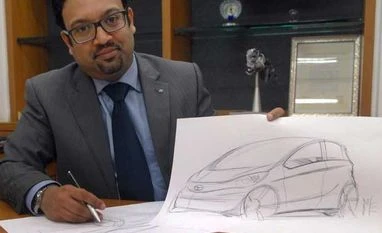
Designing consumer experiences is not restricted to showrooms these days, as the first point of connect is now the internet. To engage with the consumers early on, a design team first approves prototypes of vehicles to be put out and also focuses on the apps and websites of the company where consumers will first view the car. Pratap Bose, head of design, says: “Every level at which the consumer experiences the car has to be done differently today. It is about the entire car experience, which is why dealerships should become experience centres.”
For its latest hatchback, the Tiago, the company has come up with a marketing pitch that would connect with ‘seven senses’ of the consumers — sight, sound, touch, smell, feel, taste and intuitiveness. A car purchase, being the second biggest for any family, needs to be made memorable.
For years, Tata Motors had outsourced design requirements to specialised companies in the UK and Italy but now has about 250 employees, including 40 designers, over its three centres. Not only is designing for India a big challenge, the sensibilities of consumers here are also different from rest of the world. India continues to be the “big small car” market, where consumers want the space and features of a spacious sedan but prefer compacts.
“Indian consumers do not want to compromise on space at all and in order to understand the minor irritants that consumers had, we brought in consumers early on into the design process,” Bose said.
So, what does the Indian consumers want from his/her car? Apart from a good looking front of the car, they are concerned about remaining connected while they are driving, which means better display screens on the entertainment instrumentation panel, more storage space for iPads, phones and cup holders. Tata Motors has done small things like bring the roof lamp from above the steering wheel to the centre of the car, as consumers wanted it that way.
The next to get transformed will be the dealerships which will become experience centres for consumers. And the car will be sold on what the needs of the consumers are and not basis the specifications. "For this we need to retrain people and change the way we approach consumers," adds Bose.

 "Tata Motors designing consumers' connect")

