
Tata Steel's Kalinganagar unit to focus on import-substitute auto alloys
The firm is trying to become one of the major suppliers of high-strength alloys to auto industry
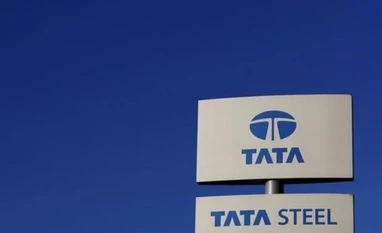 "Tata Steel's Kalinganagar unit to focus on import-substitute auto alloys")
premium
Explore Business Standard

Associate Sponsors
Co-sponsor
The firm is trying to become one of the major suppliers of high-strength alloys to auto industry
"The range of automotive alloys produced by our Jamshedpur plant is limited. This is because the hot stripping mill there is old and has its limitations. At Kalinganagar, we can roll out high strength alloys with dimensions of up to 1100 Megapascal", said a company source.
Tata Steel is keen to position its Kalinganagar plant as one of the biggest suppliers of high strength alloys to the automobile industry, especially alloys for car wheels. The steel maker has commissioned the first phase capacity of three million tonnes per annum (mtpa) at Kalinganagar and this is entirely devoted to manufacturing flat steel products that find applications in automobiles and white goods.
The steel company's Jamshedpur unit is already one of the leading suppliers to car makers like Maruti Suzuki and Toyota. Of the total nameplate capacity of 10 mtpa at Jamshedpur, 7 mtpa is for flat steel products and the rest 3 mtpa for long products.
Going ahead, the Kalinganagar plant would diversify to customised steel products for oil pipelines business. The plant in the future would cater exclusively to the needs of the domestic market. Presently, the steel plant there is exporting some products as it has some obligations under the Export Promotion Credit Guarantee (EPCG) scheme.
"We are exporting products like Tata Ferroshots to South East Asian nations. This product has been received very well. But, we would be gradually shifting our focus to the domestic markets once our export obligations are over", the official said.
In the last financial year, Tata Steel's Kalinganagar plant exported one million tonnes of steel products. Besides Tata Ferroshots, hot rolled coils were also shipped.
For domestic markets, Tata Steel is tapping both B2C (business to customer) and B2B (business to business) channels. "Under the B2C channel, the buyer is an individual customer and this category includes products like LPG cylinders. On the B2B platform, we are supplying to construction equipment companies like L&T, JCB and Komatsu", he said.
Presently, Tata Steel is running its Kalinganagar operations at a production rate of 2.7 mtpa. The plant engages around 3,500 people directly and 10,000 others are employed indirectly.
Already subscribed? Log in
Subscribe to read the full story →

3 Months
₹300/Month
1 Year
₹225/Month
2 Years
₹162/Month
Renews automatically, cancel anytime

Over 30 premium stories daily, handpicked by our editors


News, Games, Cooking, Audio, Wirecutter & The Athletic
Digital replica of our daily newspaper — with options to read, save, and share


Insights on markets, finance, politics, tech, and more delivered to your inbox
In-depth market analysis & insights with access to The Smart Investor


Repository of articles and publications dating back to 1997
Uninterrupted reading experience with no advertisements


Access Business Standard across devices — mobile, tablet, or PC, via web or app
First Published: Jul 14 2017 | 7:39 PM IST


