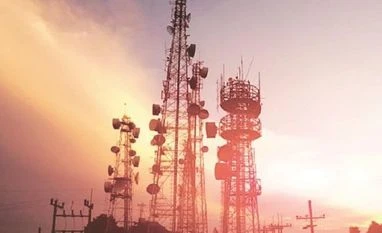
Telecommunications (telecom) companies have petitioned the Union government to repeal certain Sections of the antiquated Indian Telegraph Act (ITA) of 1885. These Sections involve criminal action against employees, but are currently irrelevant due to technological advances. The companies have asked the Centre to strengthen some Sections by imposing stringent fines, making them non-bailable, and repurposing others to protect telecom companies’ (telcos’) assets.
The move comes amid the Department of Telecommunications preparing a framework to replace the old ITA for which it has sought stakeholder feedback before the final draft is released.
Through the Cellular Operators Association of India (COAI), telecom operators have identified seven Sections that require repeal/repurposing and strengthening.
Under Section 27, the Act enforces imprisonment/fine if a telegraph officer transmits by telegraph any message on which the charge prescribed by the Union government has not been paid. Telcos want this Section repealed, saying it is obsolete due to technological advancements because human intervention is no longer required for transmission.
They have also identified Section 28, which states that any telegraph officer working in a telegraph office is guilty of any misconduct as defined under the Act, which leads to delay or disruption in the correct transmission of any message. Such an officer may be punished with imprisonment for a term extending to three months or with a fine up to Rs 100, or both. Telcos say this Section has become obsolete, and licensees deal with such misconduct in accordance with the prevailing employment laws and policies, and hence the same should be repealed.
Section 30 of the Act calls for imprisonment/fine or both if a person fraudulently retains, conceals, removes, holds without any reason any message which ought to have been delivered to some other person or, being required by a telegraph officer to deliver any such message, neglects or refuses to do so. It has asked for its repeal since there is no such human intervention.
The COAI has also asked that Section 29A of the Act be repurposed to address the menace of widespread tower frauds (where documents are forged) by introducing criminal prosecution and punishment as a cognisable offence and sending a strong signal of deterrence to perpetrators. The current law imposes a fine of only Rs 50.
COAI has proposed to introduce a minimum penalty of Rs 1 lakh and/or imprisonment of six months for the first offence and a fine of Rs 5 lakh and/or imprisonment up to two years in the case of each subsequent offence. It has recommended that the offence be made cognisable and non-bailable.
The telcos have also demanded that Section 20 be amended to make offences relating to establishing, maintaining, or working unauthorised telegraph without proper licence or authorisation from the government cognisable and non-bailable. They argue that the quantum of fines should be substantially enhanced to create deterrence and compensate the government for revenue loss.
Under the existing Act, it is non-bailable and non-cognisable with a fine which may extend to only Rs 1,000, making it easy for fraudsters to get off scot-free.
They are also pushing for firming up Section 23 to make offences relating to intrusion into signal rooms, trespass on the telegraph office or causing obstruction non-bailable and cognisable. Currently, such violations only attract a maximum penalty of up to Rs 5,000 and are bailable.
They have asked for it to be raised to Rs 1 crore per offence to be paid to the affected telco or telecom licensee since these entities incur considerable cost in acquiring licences for setting up necessary infrastructure and operations.
The telcos have also asked for amendment to Section 25A to cover damages to all kinds of infrastructure, such as optical fibre cable, base transceiver stations, exchanges, etc, created by telcos (currently, it covers telegraph line and post and has a maximum fine of Rs 1,000) for delivery of their services to customers.
Through COAI, they have recommended enhancement of the penalty, proportionate with the loss or damage suffered by the telecom service provider/licensee through an illegal act.
Sections of Indian Telegraph Act, 1885, telcos want repealed/strengthened
- Section 20: Make violations non-bailable offences and fines more stringent to deter those operating telegraph without a licence. Government should be compensated for the loss
- Section 23: Make intrusion into signal room and trespassing on telegraph office or causing obstruction non-bailable and cognisable. Increase fine
- Section 25A: Amend Section to include all kinds of telecom infrastructure, not only lines and posts. Increase penalty
- Sections 27, 28, 30: Repeal Sections
- Section 29A: Repurpose it to reduce the menace of tower fraud. Make it cognisable and non-bailable. Make fines stringent