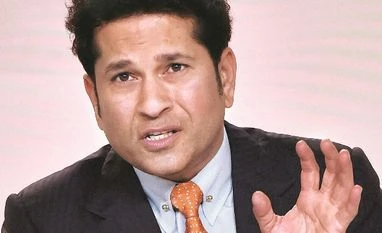
He has investments and stakes in almost a dozen companies. Nine of these together clocked a turnover of around Rs 8 crore in financial year 2019-20. Two-thirds of which came from a single business monetising his brand value through endorsements. A couple of partnerships wound up. Others lying stagnant with little or no revenue for years. A publishing business is in the doldrums. A few strategic investments in sports clubs and other new-age ideas that are yet to bear fruit. And some exciting digital partnerships, in addition to a cricket academy in the UK capitalising on ‘Brand Sachin’, raking in the moolah. In his brief stint as a businessman since his retirement from sports and politics, former cricketer Sachin Tendulkar seems to have realised that his biggest asset is, well, Sachin Tendulkar.
For the god of cricket in India and one of the most prodigious batsmen the world has seen, record as a businessman off the field has been a pale shadow of his stellar record on the field. A former Rajya Sabha member whose rather apolitical and non-controversial nominated term ended in 2018, Tendulkar took a political stand recently on the ongoing farmer protests. In an apparent riposte to US pop star Rihanna’s six-word social media post drawing the world’s attention to the farmer protest, Tendulkar, within 24 hours of her post, called for “external forces to be spectators and not participants”, and went on to bat for “not compromising India’s sovereignty”.
By jumping on to the popular pro-government nationalism bandwagon at a rather sensitive time in the ongoing protests, has Tendulkar made a strategic move to strengthen his ‘brand value’ and businesses that depend on it, even as his other ventures falter?
Image guru Dilip Cherian said, "I think he was gently guided to become a voice on the side of the establishment. One doesn’t associate Tendulkar with speaking on matters that are outside of his zone. By saying (what he did) he created an image of a person who was letting his guard down and taking a stand so that he could be seen to be on the side of the ruling establishment," adds Cherian.
The broader canvas of Tendulkar Inc may hold further answers.
While Tendulkar’s brush with business began in October 1995 – the year he signed a Rs 31-crore deal with Mark Mascarehanas’ WorldTel which made him the world’s richest cricketer – it wasn’t until his retirement from competitive cricket in 2013 that he actively explored various business opportunities. Many of his ventures are partnerships, some with his wife Anjali and others with various business entities.
One of his first ventures was a partnership with Hyderabad-based industrialist Nimmagadda Prasad in October 2015. The venture, Septozen Corporate Services, which aimed to provide “corporate services”, was also the most prolific opening partnership for any of his ventures. It clocked a turnover of Rs 22 crore in the first year of its operations. Tendulkar held a 48 per cent stake in the partnership with a contribution of Rs 8 crore. The rest was held by Prasad and later his daughter. However, after an impressive opening, the partnership’s revenues dwindled to a few thousand rupees a couple of years down the line. In 2019-20, it was barely a few lakhs.
Questions sent to Tendulkar and Ravi Reddy Chilla, a director in companies owned by Prasad, had not elicited any response as of the time of publication of this report.
When Tendulkar bought a stake in the Indian Soccer League (ISL) team Kerala Blasters FC in 2015, his association with Prasad continued. Many others, including South Indian movie star Chiranjeevi and film producer Allu Arvind had formed a consortium named Blasters Sports Ventures (later renamed Magnum Sports) to buy Kerala Blasters FC. Records show that Tendulkar’s company, Formula One Promotions and Entertainment, was actively dealing with this ISL franchise. Formula One itself had a long history.
Formed in 2001, when Tendulkar became the first batsman in history to cross the 10,000-run mark in one day internationals, Formula One was helmed by his brother Ajit and wife Anjali for almost 15 years without any business activity or revenues. Things looked up when Tendulkar came on board in March 2016 and became the majority shareholder along with wife Anjali. Ajit exited the business by transferring his shares to Tendulkar. In 2018, Tendulkar reportedly sold his stake in Kerala Blasters FC to a Dubai-based business group.
After Tendulkar came on board, Formula One also made various strategic investments. For instance, it picked up a significant stake in Oxigen Services, which claims to be India’s first non-banked mobile wallet involved in the online payments and money transfer business. Tendulkar also became a brand ambassador for Oxigen. Formula One’s fortunes have also waned in the past couple of years, with a turnover of barely a few lakhs. Most of it was transferred from Tendulkar’s other ventures. In February 2021, Tendulkar picked up a small stake in education technology firm Unacademy and – like in the case of Oxigen – became its brand ambassador.
A few other legacy ventures like Samsan Promotions, established in 1995 as a book publishing company with Tendulkar’s family members as directors, have also been rather dormant, with total revenues of a few lakhs in the past decade. Tendulkar also made a foray into sports nutrition through a venture called Liquefy Innovations with some executives of the World Sports Group (WSG). While Tendulkar invested Rs 1.5 crore in the venture in 2014, the partnership hasn’t generated any revenues to date. Almost Rs 4.2 crore have been invested in an ongoing programme called ‘Project Centurion’. Nothing much seems to be known about it yet.
Questions sent to Vinod Naidu of WSG remained unanswered till the time of publication of this report.
Tendulkar’s biggest success as entrepreneur has come not from his partnership with others in traditional business ideas but when he has leveraged his own brand value in digital-era technologies. This has been done through his company SRT Sports Management (SRT is short for his name Sachin Ramesh Tendulkar). Incorporated in 2015 after Tendulkar’s retirement, the company has since been managed by him and his wife. Involved in the “business of sports”, its stated objective is to “enable brands to leverage what Sachin Tendulkar stands for, through highly effective and mutually beneficial endorsement deals”. On its website, it states that it is the “exclusive representative of Sachin Tendulkar” and that “no other entity or individual, in India or across the world, has the authority or licence to represent Sachin Tendulkar in any capacity whatsoever.”
By the look of it, SRT Sports Management has been his most successful venture so far, with an average turnover of Rs 6 crore every year, representing 85 per cent of the earnings of all his other businesses put together in 2019-20. All of its revenues are commissions received by Tendulkar from his commercial endorsements. Among his endorsement deals are those with German carmaker BMW, IPL team Mumbai Indians, Development Bank of Singapore (DBS), and US personal care brand Gillette, among others. According to the company’s website, he has also invested in joint ventures with gaming stores like Smaash, clothing firm True Blue and others.
‘Brand Sachin’ is also being lent to the digital world in a partnership between him and Infosys co-founder Kris Gopalakrishnan through a venture called 100 MB Digital. SRT Sports Management holds a majority stake in 100 MB Digital, with the rest being held by Gopalakrishnan’s Pune-based technology firm JetSynthesys. With an application named 100 MB Master Blaster, it connects thousands of fans with Sachin Tendulkar in addition to providing a host of other interactive and live cricketing features on its platform. A couple of video games around Tendulkar have been developed. These two ventures leverage brand Sachin, monetise it with value for all stakeholders and keep on expanding it in the digital sphere as Indians increasingly spend more time consuming online content. In four years of its existence, 100 MB digital has clocked revenues of over Rs 4 crore, investing in new digital ‘Sachin’ products while burning cash in the quest for turning in a profit soon.
One of the latest ventures of Tendulkar is a cricket academy started in partnership with Middlesex County Cricket executive Richard Goatley. Tendulkar is a partner in Tendulkar Middlesex Global Academy through SRT Sports Holding LLP. The academy which runs four-day courses for youngsters in India and the UK clocked revenues of over Rs 1.2 crore and a profit of half that amount in 2018-19, the very first year of its inception. While the Covid-19 pandemic hit business plans, the camps have been quite popular in the UK and India. In the first three days of the course, kids are taught how to play in England, India and Australia, respectively. The final day teaches them the nuances of T20 and other faster ‘future’ versions of the game.
“A hugely successful sportsperson need not necessarily be a successful businessman. Some of the world’s greatest like Bjorn Borg have gone bankrupt trying their hand at business. Certainly, the brand value is always used as a force multiplier to increase the chances of success of an athlete’s own business. The brand value of an athlete is a function of time and it certainly diminishes after retirement. The aura and respect remains, but the brand value is significantly eroded if the athlete cannot maintain his visibility after leaving the sport,” says Tuhin Mishra, co-founder of Baseline Ventures, a global sports marketing firm.
In many ways, Tendulkar’s business trajectory mirrors that of Bollywood icon Amitabh Bachchan. One of his first business ventures when he was past his prime in Bollywood was a production house named Amitabh Bachchan Corporation Limited (ABCL), which, among other things, organised the Miss World contest in 1996. The failure of ABCL almost led Bachchan to financial ruin before he leveraged his brand value to spring back to relevance. While Tendulkar’s business plans aren’t either as ambitious or financially ruinous as Bachchan’s, what binds the two celebrities together is that their brand value has earned them millions and will continue to see them through the rest of their lives even after they have left the trade that made them rich and famous, and shaped and magnified their charisma in the first place.
Tendulkar seems to have realised that his investments wouldn’t bear fruit or generate returns without him being the face of it. His most treasured asset is he himself. And that could possibly explain what or who summoned the legend to intervene within hours of a pop star with thrice his social media following thrusting the farmers protest on the global stage in what was an embarrassment to the government of the day in India.


 "BS READS: Tendulkar Inc -- Businessman Sachin fumbles; Brand Sachin to the rescue")









