Tesla plans electric car factory in India

Tesla Motors in talks with India for temporary relief on importing high-end electric cars
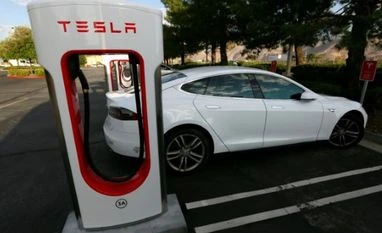
A Tesla Model S charges at a Tesla Supercharger station in Cabazon, California. Photo: Reuters
A Tesla Model S charges at a Tesla Supercharger station in Cabazon, California (Photo: Reuters)
Alnoor Peermohamed Bengaluru
Last Updated : Jun 16 2017 | 4:50 AM IST
Tesla Motors is planning to set up a factory in India to cater to the local demand for electric cars, at a time when the Modi government has launched an ambitious plan of moving to 100 per cent electric mobility by 2030.

The US carmaker is looking to enter India as a retailer and is in talks with the government for waiver of restrictions on imports of its high-end electric cars until its factory is built here.

“In discussions with the government of India requesting temporary relief on import penalties/restrictions until a local factory is built,” Elon Musk, chief executive officer, Tesla, said in a tweet on Thursday. He did not specify a time frame for the India venture.

The import penalties or restrictions that Musk referred to are most likely the norms for multinationals to set up single-brand retail in India, which mandate them to source at least 30 per cent locally. 

Unlike traditional automakers, Tesla sells and services its vehicles on its own rather than through local dealers.

Even Apple has been trying to get India to waive its local sourcing norms temporarily. While in the past the government has indicated that it might make exceptions for high-tech products (presumably iPhones and Tesla cars), there has been no clarity yet.

Because of this, India’s current laws would mandate Tesla to set up a factory and begin sourcing components locally before even selling its first car here. 

Last month, Musk had flagged this very issue while answering a query on Twitter about when the company would launch its business in India. 

“Tesla always sells directly, but apart from asking for permission to sell directly, they might be looking for some concessions on the vehicles or the factory they want to set up. All these companies come looking for special packages,” said Abdul Majeed, partner, assurance at PwC India.

India does not restrict import of automobiles by wholesalers, but it levies a huge customs duty of 119 per cent on a CBU (completely built unit). This was done to force global luxury automakers, which were eager to tap India’s growing base of rich individuals, to set up local manufacturing and assembly units.

Over the past couple of years, this policy has largely worked, with brands such as Mercedes-Benz, Audi, BMW, JLR and Volvo having units in India.

Experts believe that the government should do the same even for electric vehicles as it will help boost the local industry.

In discussions with the govt of India, requesting temporary relief on import penalties/restrictions until a local factory is built, says Elon Musk, chief executive, Tesla Motors


One subscription. Two world-class reads.

Already subscribed? Log in

Subscribe to read the full story →
*Subscribe to Business Standard digital and get complimentary access to The New York Times

Smart Quarterly

₹900

3 Months

₹300/Month

SAVE 25%

Smart Essential

₹2,700

1 Year

₹225/Month

SAVE 46%
*Complimentary New York Times access for the 2nd year will be given after 12 months

Super Saver

₹3,900

2 Years

₹162/Month

Subscribe

Renews automatically, cancel anytime

Here’s what’s included in our digital subscription plans

Exclusive premium stories online

  • Over 30 premium stories daily, handpicked by our editors

Complimentary Access to The New York Times

  • News, Games, Cooking, Audio, Wirecutter & The Athletic

Business Standard Epaper

  • Digital replica of our daily newspaper — with options to read, save, and share

Curated Newsletters

  • Insights on markets, finance, politics, tech, and more delivered to your inbox

Market Analysis & Investment Insights

  • In-depth market analysis & insights with access to The Smart Investor

Archives

  • Repository of articles and publications dating back to 1997

Ad-free Reading

  • Uninterrupted reading experience with no advertisements

Seamless Access Across All Devices

  • Access Business Standard across devices — mobile, tablet, or PC, via web or app

Next Story



