At a time when big infrastructure players are struggling with heavy debt burden, a number of relatively smaller players are on the cusp of emerging as the next generation of construction companies. These companies, which are largely based in tier II cities like Bhopal, Udaipur and Ahmedabad are gaining significant traction, accounting for a lion's share of contracts being recently awarded.
In 2015-16 alone, five companies namely - Dilip Buildcon, GR Infra, Gayatri Projects, Oriental Structural Engineers and Sadbhav engineers were together awarded 32 per cent of all projects by NHAI, amounting to 30 per cent of the total project cost of all contracts.
Financially, these companies appear to be on sounder footing than their bigger counterparts. In 2014-15, the last year for which consolidated balance sheet data is available, not only did these companies have lower debt to equity ratios, but their interest coverage ratios were also higher than the bigger companies. A higher ratio indicates better financial health as it means that the company is better placed to meet its interest obligations from operating earnings.
For instance, in 2014-15, the consolidated debt to equity ratio of Sadbhav Engineering and Dilip Buildcon was estimated at 4.46 and 3.42 compared to 5.57 and 10.04 for GMR Infra and GVK Power Infra. Some of these companies seem to be making significant headway in lowering their debt burden contrary to the bigger players. Gayatri projects has lowered its debt burden from Rs 9428 crore in 2013-14 to Rs 4305 crore in 2014-15. But despite this, the company remains an outlier with a higher consolidated debt to equity ratio than its counterparts.
These companies also have a higher interest coverage ratio which places them in a better position to serve their interest burden. While big infra majors like GMR Infra and GVK Power Infra are estimated to have an interest coverage ratio of 0.21 and 0.34 respectively in 2014-15, the same for Dilip Buildcon and Gayatri Projects was estimated at 1.36 and 0.87 respectively. Their meteoric rise and sounder financial position can be largely explained by a strategy which involves shying away from taking on the development risk associated with a project. The rationale for this strategy is simple.
After seeing big players take on huge debt to fund projects and falter, the smaller players are happy to take the engineering, procurement and construction (EPC) route. Under EPC contracts, developers do not take on the market risk which arises from revenue from toll collections being lower than projected. Lower revenue collection negatively impacts the projects viability.
Further, unlike a build-operate-transfer (BOT) contract, in an EPC contract the developer doesn't have to put in equity and take on debt to finance the project.
"As opposed to a BOT contract, an EPC contract is a safer option for the developer as the developer does not take on any market risk. However, the returns in an EPC contract are typically lower than that of a BOT contract", Sushmita Majumdar Director, CRISIL Ratings

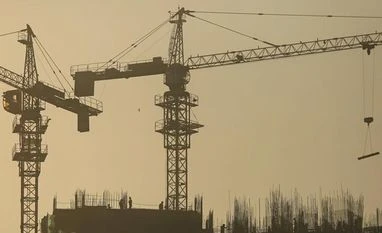 "The next-generation construction firms")


 Connect with us on WhatsApp