Titagarh Wagons, Texmaco to diversify amid stagnant orders from Railways

While Texmaco is focussing more on railway EPC and railway electrification, Titagarh is eyeing the international market
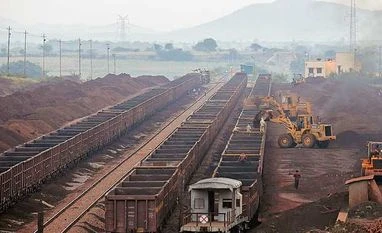
Titagarh Wagons, Texmaco to diversify amid stagnant orders from Railways
Avishek Rakshit Kolkata
Last Updated : Oct 25 2017 | 2:43 PM IST
Facing stagnancy in wagon orders from Indian Railways, Texmaco Rail and Engineering Limited (TREL) and Titagarh Wagons Ltd (TWL) are changing their product mix and market strategy to keep up with the changing times as well as to de-risk themselves from Indian Railways.

While TREL is focusing more on railway EPC (engineering, procurement and construction) and railway electrification — specialities brought in after acquisitions of Kalindee Rail Nirman Engineers and Bright Power Projects (India) — TWL is concentrating more on exposure to the international market after the buyout of Titagarh Firema Adler SpA in Italy and a 50:50 joint venture with French firm Matière SAS. Also, its subsidiary Titagarh Wagons AFR in France, after the acquisition of Arbel Fauvet Rail in 2010, had given the parent company exposure to African countries.

Metro rail projects are a key area for both TREL and TWL. While TREL is focused on EPC projects in Ahmedabad, Nagpur and Mumbai, and exploring opportunities in neighbouring countries, West Asia and Africa, TWL is eyeing projects in Indonesia, Malaysia, Bangladesh and others, apart from ones in India. However, for TWL, the focus is on car body, bogies, metro train and others.

“The Kolkata metro refurbishment project is also a major one,” Umesh Chowdhary, managing director at TWL, said.

Serious about global prospects in metro railway projects, TWL had acquired Titagarh Firema Adler SpA, a metro railway player for over 100 years.

Another opportunity at home which both TREL and TWL eye is the Linke Hofmann Busch (LHB) coaches. Faced with quality issues, railway minister Piyush Goyal has stated that the existing coaches will be replaced with the LHB variety, which is safer.

Chowdhary is optimistic that this vertical, once live, will be able to compensate for the stagnancy in wagon procurement from the Indian Railways.

As part of its diversification plan, TWL is branching off into defence and shipbuilding after merging its shipbuilding subsidiary with itself. Recently, it bagged a Rs 175-crore order from the Indian navy to build four vessels. It also won a $9-million order from Nepal for supply of 30 Modular Bridges with 15 Launching Kits and 20 containers which the company will build using the technology procured via its French joint venture with Matière SAS. 

The de-risking strategy and international exposure not only helped TWL maintain an order book of Rs 2,300 crore, of which, Chowdhary says, 70 per cent is through its Italian and French ventures, but also helped it increase the consolidated net revenue in the last financial year by 79 per cent to Rs 1,739 crore.

Wagons and coaches, taken together, continue to dominate the company’s earnings, operating margins as well as profitability. Last year, wagons and coaches accounted for 95 per cent of the revenue while profitability from this vertical jumped 182 per cent to Rs 71.5 crore on a consolidated basis.

TREL’s order book, on the other hand, stands at over Rs 2,800 crore, of which EPC accounts for Rs 1,900 crore, coaches and locomotive orders Rs 550 crore and orders in the heavy engineering division Rs 400 crore.

Five years ago, TWL’s dependence on the wagon business was 100 per cent; now it 15-20 per cent. Chowdhary expects revenue contribution from wagons to go up to 25-30 per cent. 

For TREL, while wagons accounted for 75 per cent of the revenue five years ago, it is less than 50 per cent currently and expected to fall to 25 per cent in the next five years.

“We are emerging as a major railway EPC company from a wagon builder and the focus is going to be majorly on EPC contracts now,” A K Vijay, chief financial officer and executive director at TREL, said.

During 2016-17, the Indian Railways floated tenders for 12,277 wagons, for which TREL emerged as the lowest bidder. However, the railways chose to re-tender 2,500 wagons, of which the company managed to get 1,338. 

This financial year, the Indian Railways is yet to float any tender for wagon procurement. Nevertheless, Vijay is optimistic that next month, the contract for 9,500 wagons will be finalized, an opportunity of at least Rs 237.50 crore, and the completion of the dedicated freight corridors will revive wagon demand in the country.


One subscription. Two world-class reads.

Already subscribed? Log in

Subscribe to read the full story →
*Subscribe to Business Standard digital and get complimentary access to The New York Times

Smart Quarterly

₹900

3 Months

₹300/Month

SAVE 25%

Smart Essential

₹2,700

1 Year

₹225/Month

SAVE 46%
*Complimentary New York Times access for the 2nd year will be given after 12 months

Super Saver

₹3,900

2 Years

₹162/Month

Subscribe

Renews automatically, cancel anytime

Here’s what’s included in our digital subscription plans

Exclusive premium stories online

  • Over 30 premium stories daily, handpicked by our editors

Complimentary Access to The New York Times

  • News, Games, Cooking, Audio, Wirecutter & The Athletic

Business Standard Epaper

  • Digital replica of our daily newspaper — with options to read, save, and share

Curated Newsletters

  • Insights on markets, finance, politics, tech, and more delivered to your inbox

Market Analysis & Investment Insights

  • In-depth market analysis & insights with access to The Smart Investor

Archives

  • Repository of articles and publications dating back to 1997

Ad-free Reading

  • Uninterrupted reading experience with no advertisements

Seamless Access Across All Devices

  • Access Business Standard across devices — mobile, tablet, or PC, via web or app

Next Story



