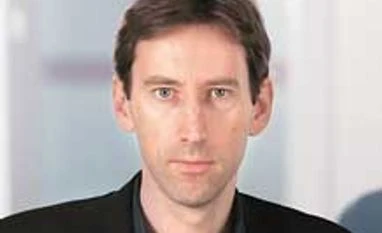
TV in UK is heavily regulated, in a good way: Jonathan Thompson
Interview with Chief executive officer, Digital UK
Vanita Kohli-Khandekar Digital UK was born in 2006, when some of the UK's largest terrestrial broadcasters - British Broadcasting Corporation, Channel 4 and ITV - got together to deal with digitisation. As the Indian television sector stares at a stalling digitisation process, Digital UK offers a model worth looking at. Chief Executive
Jonathan Thompson spoke to Vanita Kohli-Khandekar in London recently. Edited excerpts:
How did Digital UK aid the digital switchover in Britain? Digital UK was formed to help competing terrestrial broadcasters in the move from analogue to digital. Digital terrestrial television (DTT) is the dominant platform for TV viewing in the UK. It reaches 75 per cent of UK's 26 million TV homes and has a 44 per cent share of viewing. (Satellite TV has the next highest share at about 40 per cent.) The digital switchover was facilitated by Ofcom (the UK's communications regulator). We co-ordinated the switchover programme on behalf of the broadcasters and transmitter operator Arqiva (one of the shareholders in Digital UK), working in conjunction with Ofcom and the government.
The company managed the communications campaign to prepare viewers, sector and other stakeholders for the end of analogue TV broadcasting in the UK, acting as the single point of contact and information for all parties. The project was completed on time and within the budget and the vast majority of people were ready for switchover in their areas. Had Digital UK not been formed, the project might not have been as well co-ordinated, leading to a risk of uncertainty for viewers and the sector (for a report on the UK switchover, visit
http://goo.gl/L4QPc7).
What does Digital UK do now? Digital UK continued simply because the digital switchover went so well. It is a low-cost way of helping broadcasters manage change. Now, we do three things. One, we coordinate the programme details on the electronic programming guide (EPG) for the broadcasters (BBC, ITV and Channel 4 are among Digital UK's shareholders).
EPG is mandatory under Ofcom guidelines and you need a licence to do it. We help in the launch of new channels, to sort technical faults and we also run a call centre that provides advice and support to viewers who have any issues with their Freeview service such as signal interruption, re-tuning, etc.
Has Digital UK replaced any trade body, which would have done the job usually? There are a number of industry bodies in the UK broadcasting sector, including BARB (the audience measurement service) and the Digital Television Group (a cross-industry forum that oversees technical standards and testing for consumer electronics products). Digital UK has not replaced any old body.
What is the role that Ofcom and the ministry have played in the digitisation process? The government sets overall policy and legislation for the sector and, therefore, sets the policy objective of switching off the analogue TV service to release spectrum. Ofcom is the sector regulator and both (the regulator and government) have specific powers with regard to the management of spectrum and the licensing of broadcasters in the UK. It also worked with Digital UK in the implementation of digital switchover in the UK. Television in the UK is a heavily regulated sector, in a good way.

 "TV in UK is heavily regulated, in a good way: Jonathan Thompson")

