Uber APAC head quits in major recast; India integrated with European region

The move of integrating the two regions under a single leadership is primarily meant to bring in more synergies in the ridership business
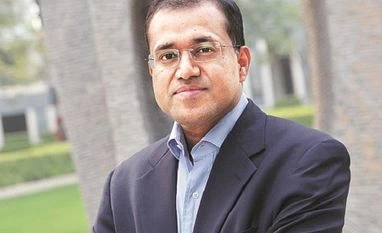
Amit Jain will be leaving at the end of May 'to spend time with his family
Surajeet Das Gupta
3 min read Last Updated : Apr 25 2019 | 1:53 AM IST
Uber Asia Pacific head Amit Jain has resigned from the company after a four-year stint. Jain, who started the rides business in India and headed Uber's India operations before becoming head of the Asia Pacific business, will remain with the company till the end of May.

The rides business of Uber India will now report to Pierre-Dimitri Gore-Coty, who as vice president heads the car-hailing company’s Europe, Middle East and Africa business from Amsterdam. So far, the India rides business was reporting to the Asia Pacific region, headquartered in Singapore. The move comes as part of a major restructuring of the India unit.

Gore-Coty will now have an integrated portfolio of regions to oversee. It includes Uber’s Asia-Pacific ride business, which has India and south Asia, Japan, South Korea, Taiwan, New Zealand, Hong Kong and Australia, apart from his existing responsibilities.

Explaining the changes at a time when the company has filed for an IPO, Uber COO Barney Harford said: “After four great years, Amit Jain will be leaving Uber at the end of May to take a well-deserved break to spend time with his family before taking the next step in his career. Amit has been instrumental in growing our rides business — first in India from launch to category leadership, and more recently across the Asia Pacific region.”

Harford added that he was excited that Gore-Coty, one of the firm’s most experienced leaders, would take responsibility for the Asia-Pacific rides business, in addition to his current role of leading the rides teams across Europe, the Middle East and Africa. “I look forward to seeing Pierre work with our talented APAC teams to unlock opportunity markets such as Japan and South Korea, and continue our strong momentum in markets such as India and Australia. Uber remains deeply committed to the Asia-Pacific region and under Pierre’s leadership will continue to invest in our people, products and partnerships,” he said.

The move of integrating the two regions under a single leadership is primarily meant to bring in more synergies in the ridership business. For instance, emerging markets like India and sub-Saharan Africa, which includes Egypt, Nigeria, Kenya and Tanzania, have a lot of similarities in the business and products, which are being developed in one of the countries and launched in other markets. 

Uber Lite, which was developed in India to take care of slow internet speeds, has been launched in about 20 countries after its success in India. Similarly, high-capacity vehicles, which have been launched in Egypt, are also expected to be experimented in India to see their potential.

The company earlier said it was exploring high-capacity 12 or 30-40 seater vehicles, which would have both fixed as well as variable routes depending on demand supported by technology. It could also draw on the expertise being developed in the UK on electric vehicles for India. Uber is also increasing its R&D headcount from 500 to 1000 in a year and will work on requirements not only for India but also for other emerging markets. The integration will also help synergies in developed markets of Europe and the UK with that of advanced markets like Japan, South Korea and Australia.

Uber has also trimmed its business in the Asian region, where it sold its business in south-east Asia to Grab, the Singapore-based ride-share company, in exchange of which it got a 27.5 per cent stake in the company. 

One subscription. Two world-class reads.

Already subscribed? Log in

Subscribe to read the full story →
*Subscribe to Business Standard digital and get complimentary access to The New York Times

Smart Quarterly

₹900

3 Months

₹300/Month

SAVE 25%

Smart Essential

₹2,700

1 Year

₹225/Month

SAVE 46%
*Complimentary New York Times access for the 2nd year will be given after 12 months

Super Saver

₹3,900

2 Years

₹162/Month

Subscribe

Renews automatically, cancel anytime

Here’s what’s included in our digital subscription plans

Exclusive premium stories online

  • Over 30 premium stories daily, handpicked by our editors

Complimentary Access to The New York Times

  • News, Games, Cooking, Audio, Wirecutter & The Athletic

Business Standard Epaper

  • Digital replica of our daily newspaper — with options to read, save, and share

Curated Newsletters

  • Insights on markets, finance, politics, tech, and more delivered to your inbox

Market Analysis & Investment Insights

  • In-depth market analysis & insights with access to The Smart Investor

Archives

  • Repository of articles and publications dating back to 1997

Ad-free Reading

  • Uninterrupted reading experience with no advertisements

Seamless Access Across All Devices

  • Access Business Standard across devices — mobile, tablet, or PC, via web or app

Next Story



