We are not chasing deals brought by investment bankers: Ramesh Venkataraman
Interview with Senior partner, Samena Capital
Reghu Balakrishnan Mumbai Samena Capital, the private equity fund focused on Asia and North Africa, manages $700 million across private equity, credit and hedge fund seeding. Established in 2008, Samena Capital has invested in Mahindra Two Wheelers, Jubilant Energy and Jubilant Life Sciences. Recently, it invested in Dubai-based RAK Ceramics.
Ramesh Venkataraman, senior partner, Samena Capital, talks to Reghu Balakrishnan about the changed regulatory environment and the company's investment strategies. Edited excerpts:
After a new government at the Centre, are investors confident again? On a fundamental basis, we were always strong believers in India's potential. If you are looking at investments, Samena Capital's investment in Mahindra Two Wheelers in January was well before this current wave of confidence. In fact, when we invested three-four months earlier, the rupee had fallen. But I was sure the fundamentals were strong. I think now, there is a change in sentiment because people feel a few decisions that have been blocked for a while will go through. Also, the new government has promised to move quickly in a number of key areas.
Which specific areas is Samena focused on in India? We are sector-agnostic. Fundamentally, we look for good companies, with good management teams, which we can support through our networks. We are a group of businessmen backed by an investment team; so, a lot of our capital comes from business families from West Asia, China, India, Europe, etc.
PE funds are chasing the same deals in India. Is valuation a concern? If you look at our transactions, we are not chasing deals brought by bankers. For all our deals, we have access to the promoters or to the founding shareholders. We have dialogue with them and then, we decide what makes sense in terms of valuation. So, I am not very worried about whether there is a frothy market in terms of consumer investment because all we have done is on a proprietary basis.
As an Asian markets investor, what are the major challenges you have seen in India, as well as other markets?
India went through a cycle - from a sentiment perspective, currency depreciation and the slowdown in the macro economy certainly affected us as investors. In West Asia, we were affected by the Arab Spring. But West Asia has come back strongly through the past year and India, as you know, is coming back strongly. One of the advantages of being pan-regional is we can balance our exposure across the region.
What do you think of the concern over exits?
I think it has been a challenge for a number of Indian investors. Some of our investments are public-market ones. Exits are through the market; so, when we feel our investments are fully delivered, we exit through the market; we are not dependent on anyone. In the case of private investments, we will see how the market evolves. Many of our private investments are structured on the basis of ways to exit. So, we either have a put option or some other structured way of coming out capital-light.
You have started investments from the credit fund.
We've been investing for the past six-seven months. We don't disclose such matters, especially investments, because as debt instruments, they are privately negotiated. Now, it's about 70 per cent invested. It's a $60-million fund, and growing.
Which are the new potential areas in the Indian PE space?
I think real estate is one of the primary areas. There are a lot of real estate players who are distressed or stressed financially. That's the main area in which we have seen a lot of approach---some industrial and core industrial, especially automotive-exposed. But I think these are coming out of the cycle.
What new trends do you expect in the Indian PE space?
I think slowly, there won't be full buy-outs, but carve-outs and spin-offs of companies. I think we'll see more and more controlled deals, non-core, spin-offs looking for PE to come in and develop the business. I think secondary deals are happening because a lot of first-generation PEs will exit.

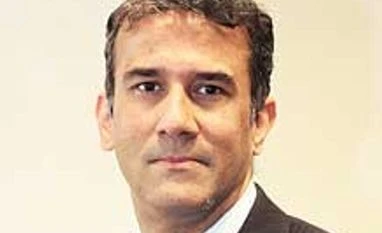 "We are not chasing deals brought by investment bankers: Ramesh Venkataraman")

