Home / Companies / Interviews / We want to be stronger before going for IPO: CavinKare's Vijayaraghavan
We want to be stronger before going for IPO: CavinKare's Vijayaraghavan
In a Q&A, the company CEO, in charge of the FMCG business details about pricing pressure, cartelisation issues in the raw material space and the company's roadmap, going ahead
premium
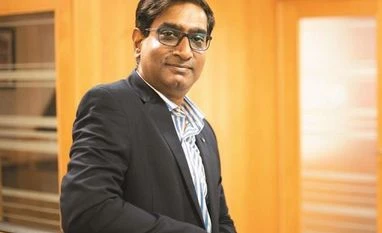
Venkatesh Vijayaraghavan , CEO, in charge of the FMCG business, CavinKare
A day after Chennai-based fast-moving consumer goods (FMCG) major CavinKare announced restructuring of its businesses, the company said, going ahead, it will bet big on sectors like e-commerce and expand overseas. Company chief executive officer (CEO), in charge of the FMCG business, VENKATESH VIJAYARAGHAVAN shares with Shine Jacob details about pricing pressure, cartelisation issues in the raw material space and the company’s roadmap, going ahead. Edited excerpts:
What are the key advantages of the current restructuring?
We are looking at a turnover of Rs 5,000 crore in the next three years. This will be achieved through a combination of being present in categories that are scalable and profitable as well as by expanding our presence in domestic and overseas markets. We want to increase our physical presence by scaling up existing units in Bangladesh, Sri Lanka and Nepal and also want to increase our exports to much more than the 40 countries today. We want our overseas market share to increase from 4 per cent to 20 per cent of our turnover.
The future course of the business will be led by technology and analytics-led insights. From predominantly being an FMCG now, over a period of time, we will scale up in ancillary businesses. We will also be aggressive in segments like CK Bakery and Sanchu Animal Hospital. We want to be stronger than what we are today and go for an initial public offering (IPO) after a couple of years.
You appear bullish on e-commerce and expect it to contribute 25 per cent of the revenue by 2030. How are you going to achieve this?
There will be two business models emerging – product-led model and retail segment. E-commerce is an integral part of the FMCG business today. We are bullish as ecommerce offers us the opportunity to scale up existing portfolios and launch new direct-to-consumer brands. We are growing over 100 per cent on a yearly basis in ecommerce. To boost that, we will be launching new products and brands and rope in strategic partners. In the next two years, you will see a plethora of products coming from our side and very quickly a couple of them will be launched.
What is the sort of pressure that you are facing due to rising input costs and container crisis?
We have seen the impact of cost increase in two to three areas – one is fuel price increase that raised the logistics cost. The other areas are rise in prices of imported raw materials and in the container segment. For export containers, in some routes like the US and Australia, we are even seeing around a 200 per cent spike, leading to a cost escalation. On the import of raw material, we are seeing an impact of around 5-7 per cent on our costs. They were largely coming from either China or some parts of Europe.
How much of this will be passed on to consumers?
We operate in a scenario where almost 45 per cent of our turnover is coming from the sachet business. Here, prices are more or less fixed that we will not be able to pass on to the consumer. However, we would rather go for value engineering to hold on to some of our costs.
Going forward, will the majority of your turnover be from sachet?
There are three spaces that are emerging today. One is of course the small is valuable (sachet) segment and it has its own growth. Second part is the value-for-money segment, which is emerging very slowly. The third one is, as I mentioned, the e-commerce segment. We will move aggressively in all the three segments. We will continue to focus on affordability to consumers and create the capability to come up with premium and mass-premium products for a different set.
When you talk about CavinKare 2.0, what does it mean financially and operationally?
It means that we continue to retain our strength and build some of the qualities that new-age companies have today that helps us to be future proof. This structure today will consolidate leadership at the vertical level. We are confident that each space that we are present today has a good opportunity to grow fast. This will help us to scale up from the current level to a growth rate of two to threefold.
Read this article for free
Register to continue reading premium journalism and analysis from Business Standard.

 "We want to be stronger before going for IPO: CavinKare's Vijayaraghavan")










 Connect with us on WhatsApp