What the poor watch on TV
A five-state study on the effects of digitisation shows the poor in the country love knowledge-based programmes
Vanita Kohli-Khandekar New Delhi India's poor love digitisation for the choice and quality it offers. Discovery and National Geographic are the most popular channels in some of the poorest parts of the country, largely because the knowledge-based programmes on these channels are considered a substitute for decent education. And, the poor love shows on agriculture, vocational training and job opportunities.
These, among others, are some of the 'indicative findings' of a five-state study conducted by Sevanti Ninan, founder-editor of thehoot.org. The study, done under the Media Foundation and funded by the Ford Foundation, covered Andhra Pradesh, Odisha, Delhi, Gujarat and Chhattisgarh, with some additional interviews in Uttar Pradesh and Bihar. The research team travelled to 15 villages, two semi-urban areas and six urban slums to look at how digitisation of television, mandated in 2011, was affecting the poor (the report can downloaded from the research section of thehoot.org).
The family incomes of those surveyed was Rs 4,000-12,000 a month. As such, while they love digital television because of the variety and quality, they find it expensive. Many are dropping out of TV-watching numbers, while others are cutting on food or savings, much like the poor in other countries. (
A SMART IDIOT BOX)
Poor Economics, the award-winning 2011 book by two Massachusetts Institute of Technology economics professors - Abhijit Banerjee and Esther Duflo -, detailed the story of a farmer in Morocco who said if he had more money, he would buy more food. When the authors asked him why he spent on his TV and DVD player when he had no money for food, he said, "TV is more important than food." The point in their dull, grinding days, the "things that make life less boring, are a priority for the poor", the book said.
That is exactly the case with India's poor.
The study also shows how irrelevant Doordarshan is becoming in the country's hinterland, where cable and DTH have very high numbers. Though DD's Freedish, a free DTH service, is a handy option for many of these people, they complain it doesn't give enough of what they want - more shows based on agriculture, education and vocation. The agricultural programming on DD in four of the states where the survey was conducted, excluding Chhattisgarh, accounted for less than 10 per cent of the total programming. In Chhattisgarh, it stood at 20 per cent.
The indicative findings are already causing a ripple of sorts. Prasar Bharati chief executive Jawhar Sircar has ordered his team to get Discovery on Freedish.
(Disclosure: Sevanti Ninan is the wife of TN Ninan, chairman of Business Standard Limited)

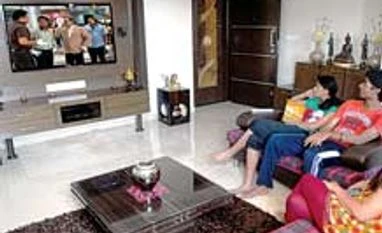 "What the poor watch on TV")


 Connect with us on WhatsApp