Currae HealthTech Fund, a Rs 1-billion one led by Apoorva Patni, is an investment house keen to build a footprint in the health technology sector. Ajay Mahipal, investment head of Currae, joins Patni to discuss why the technology needs to be profitable to sustain and the challenges it faces. Edited excerpts from an interview with Romita Majumdar.
How is Currae leveraging investments in health care?
Patni: Health care is a compulsory consumption, apart from education; unlike education, it can be profitable, theoretically. Within health care, we focus on uni-speciality boutique hospitals, including gynaecology, ophthalmology and elective orthopaedics. We also saw a lot of white space where tech could be used to disrupt health care. Initially, we wanted to execute the ideas ourselves but we lacked the expertise and started backing entrepreneurs who were trying to disrupt health care through tech.
Mahipal: Since we started the healthtech journey we had some broad contours in mind on growth in the segment. We started with investments in data analytics, health care discovery models and marketplace models, devices and software as a service (SaaS). We have 17 companies in the portfolio and two successful exits. We are now investing with institutional investors like Matrix, Nexus and Westbridge.
What criteria do you look for in investee companies and what engagement do they get out of Currae beyond finances?
Patni: We do look for early stage firms because healthtech is in that stage of development where most start-ups are still dabbling in Series-A funding. We enter firms pre-Series A but post revenue, and we back them up to maybe Series B. Given our health care background, we can help them meet health practitioners and provide some amount of data, a huge advantage for budding entrepreneurs.
Mahipal: These companies get access to our hospitals and doctors and strategic insights. Across our portfolio, we are able to bring in a lot of cross-synergies and business development guidance.
How difficult or easy is it to measure progress, given that all start-ups might not have similar lifecycles or business models?
Mahipal: For service oriented start-ups like data analytics, they are basically a business-to-business model (B2B) and much easier to measure, based on what is the current dividend traction or how many companies they have broken into. On the B2C (business to consumer) side, where the start-up might still be in a customer acquisition phase and might not have started monetising, we see metrics like how many people are coming onboard, what is the length of engagement, repeat rate, etc.
What is Currae’s position on impact investment and how can fledgling start-ups build engagements with the investor community?
Patni: As far as engaging with the investor community is concerned , the hustle an entrepreneur has in terms of being able to sell his story and reach out to the ecosystem makes him an entrepreneur. However, the system is fairly aware right now and there is a high degree of fear of missing out in minds. Compared to when the likes of Flipkart started out, when there weren't enough accelerators out there, the current set of entrepreneurs have it much easier. The angel investor community is eager to get into deals early. Pharma firms have been looking at this space and helping with a lot of analytics. Insurance companies have also started engaging with the ecosystem beyond curiosity, on how they can help prevent the advent of more serious diseases.
Ultimately, every idea has to be profitable to create a true impact.
For it to sustain in the long term, it has to be profitable.

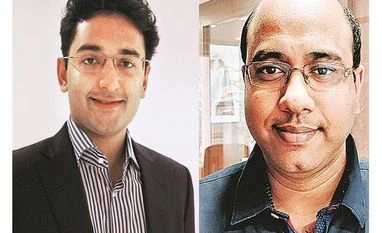 "Why healthcare ideas need profitability, Currae's Patni and Mahipal explain")











