Three years ago, the Union home ministry had asked the ministry of communication and information technology (IT) whether the latter could block social media platforms such as Twitter in specific parts of the country. The request was in the wake of rumours that led to many workers from India's northeastern states to flee Bengaluru in 2012.
The communication ministry, after consulting its two wings - the department of electronics and IT and the department of telecommunications (DoT), which provide licences to internet service providers (ISPs) - replied that it did not have the capacity to restrict the availability of social media in a particular area, but had the option to block Twitter throughout the country.
It further advised the home ministry not to go for the countrywide ban, fearing a backlash from activists. The home ministry, then, asked the departments concerned to build such a technology to avoid repetition of incidents similar to that in Bengaluru.
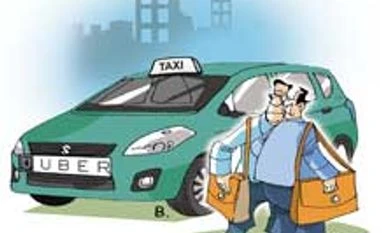
Now, after three years, when the government wants to block taxi aggregators such as Uber, Ola and TaxiForSure in Delhi for not adhering to the law, it is troubled with a similar problem. It is not clear if the government has the technical capability of effectively blocking such service providers.
On Thursday, the DoT asked the ISPs to restrict these web-based applications in Delhi. The ISPs, however, said they didn't have the technology to carry out the government's instructions.
"We cannot put a filter for websites of Ola and Uber as they are based on https and are highly encrypted. But we have blocked TaxiForSure, which is on http," says Rajesh Chharia, president of Internet Service Providers of India.
Http stands for hyper text transfer protocol, whereas the https means hyper text transfer protocol (secure). The difference between the two can be understood from the fact that most of the banking sites and e-mail service providers use https for secure transactions and exchange of information.
Experts say access to a website or application can be restricted either at its origin or at the international gateway. Since the servers for most of the websites and applications are located outside India, neither the government nor the ISPs have the rights and expertise to block it. What best can be done is to restrict the content or website at the international gateway in Mumbai.
However, the catch is if the restriction is applied at the international gateway, the entire country will not be able to access these websites and mobile-based applications. It means taxi aggregators Ola and Uber, which are operating without a licence, will continue to work without any problem in the national capital, because they have not been banned nationally.
"The government is well aware of this reality that region-wise blocking is not possible," says a sector leader, who wished not to be named.
Some argued that if the ISPs cannot filter these web-based applications, then the government should go the other way around. It should block internet protocol (IP), a unique number assigned to each computer or laptop, from accessing these applications. For instance, an Uber user in the national capital should be denied permission to its website and mobile application.
A high-ranking security official, who had dealt with the issue during the exodus of northeastern people, said they had suggested that the government collect and maintain database of IP addresses issued in any city.
After a lot of deliberation at the ministry and industry level, the government decided to set up the Central Monitoring System to deal with such issues. The system is still in the process of being setting up, but it is not clear whether the government departments are developing any such technology.
"Uber and Ola are part of a larger issue. There are many foreign websites, which are very popular in India, but we don't have any sort of control over them. We had suggested enacting a law that will force all websites and web-based applicants to set up their servers in India. But nothing has move in this direction, too," says the security official quoted above.
The government officers, too, seemed to be divided on the issue of blocking these websites. One officer said currently, the technical network of telecom operators is such that the geographical blocking might not be possible. "However, if the government wants, they can ask the operators to modify the architecture in order to facilitate the blocking. So, it is very much possible if the government really wants to get it done," said the official, adding that geographical blocking wouldn't make sense for these companies since a cab for Delhi could be booked by somebody sitting in Mumbai or New York.
The other official said while the ISPs are right in claiming that they can't block https sites, the onus to block the sites is not entirely on them. "Ideally, since there is a judicial order under Section 69 A of the Indian IT Act, the taxi companies themselves should comply with it without waiting for the ISPs to block them. It's a judicial order, which is binding on everybody and saying that we will continue to operate despite the order is not correct. Nobody is above the law."
A meeting of senior officials is expected soon to decide further on the matter.
Till then, the only way for the Delhi government to stop operations of these technology aggregators is to approach the courts. The other hitch is that these companies do not operate from the national capital. The Delhi Transport Department, along with the Delhi Police, can only suspend the permits of the taxis and prosecute drivers who are working for these two companies.

 "Why Uber and Ola cannot be blocked in Delhi")


 Connect with us on WhatsApp