With wings clipped, payments banks face uphill task

Currently, only three have completed more than six months of operation in the space - Fino Payments Bank, Airtel Payments Bank and Paytm
airtel
Mayank Jain New Delhi
Last Updated : May 04 2018 | 7:01 AM IST
In 2015, the Reserve Bank (RBI) gave in-principle approval for 11 entities to set up a different lender entity, termed ‘payments banks’. The objective was to establish new entities that could facilitate digital payments with minimal friction and bring more people into the banking system’s fold.

Three years later, these seem to be struggling to carve and retain a niche for themselves. In fact, three — Cholamandalam Distribution Services, Sun Pharmaceutical and Tech Mahindra — surrendered their licences without starting operations. Of the rest, Reliance’s Jio payments bank was launched last month. India Post has had a soft launch and is yet to start full operations. 

Currently, only three have completed more than six months of operation in the space — Fino Payments Bank, Airtel Payments Bank and Paytm. Fino started with the broadest base, of 410 branches across 14 states, 25,000 banking points across the country and sees a little more than 15 million monthly transactions. It has already increased its base by 12 branches since its launch. 

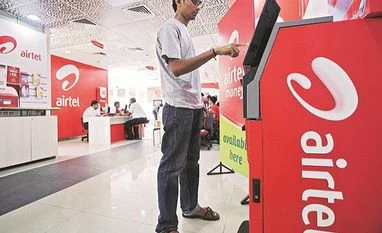
Airtel Payments Bank capitalised on the parent entity’s big telecom base, converting Airtel wallet users to banking customers. It had launched with the highest interest rate on deposits, of 7.25 per cent annually; this was cut to 5.25 per cent this February. 

The chief executive of Airtel’s bank quit last year, after the controversy around usage of the Aadhaar e-KYC, for converting customers without their consent. It was fined Rs 50 million by the RBI for breaking the know-your-customer rules.

Even so, some executives in these banks are optimistic. This is important because the rules limit payments banks’ functions. These cannot lend or give credit and may only hold deposits up to Rs 100,000 a customer. 

Fino has found ways around these restrictions. It has entered into agreements with entities that can provide these services. “It is too early to say where the industry is headed. Airtel was the first to launch but is still going through the UIDAI (Aadhaar) issue. Except Fino and Paytm, I don’t think anyone has done any serious work yet,” said Shailesh Pandey, head of strategy and marketing at Fino Payments Bank. 

He said Fino provides the full stack of services, from loans, remittances, digital payments to savings accounts, through its collaboration with companies. The bank earns revenue for the partnerships by directing customers to different entities, even as its mainstay remains the remittance business. Fino is looking to diversify by offering mutual funds in the near future. 

“We also make money like any other bank. We can’t do credit but can do it on someone else’s behalf. We have a tie-up with ICICI Bank, where we disburse gold loans and the book is about Rs 800-900 million every month,” Pandey said. The business correspondent model of lending earns the bank about 10 per cent of interest on the loans they facilitate. 

However, analysts watching the space aren’t so convinced about the potential of payments banks. “Unless you have a large eco-system supporting it, the business is very difficult to sustain. Barring a few, most of the rest may not stand the test of time,” said Jindal Haria of India Ratings and Research. 

An indication may be had from the balance sheets. While Airtel doubled its loss from Rs 2.5 billion in 2016 to Rs 5 billion in 2017, Fino posted a loss of Rs 820 million for the year ended March 2017.

According to Haria, now that every normal bank is providing digital payments and services, which payments banks were supposed to do, there’s tough competition — every bank goes after the same crop of customers. There’s UPI, Aadhaar payments and everything else for each bank, which diffuses the differentiation of payments banks. 

Payments banks were a great idea when floated but with digital payments, it sounds like a redundant idea, said an executive of one of the mobile payments banks.

Another reason for the struggle is the regulatory web they find themselves in, said Amol Kulkarni, fellow at CUTS International, a development agency. “The biggest constraint is that they cannot lend, which is the whole and soul of banking as we understand it. This is why they have trouble making money. Additionally, they have the challenge of doing double KYCs, as the automatic KYCs by telecom companies have been deemed invalid. This is a large friction area, which reduces the competitive advantage of using digital technologies to gather a large number of customers quickly.” 

Amid all this, payments banks continue to hope that they can beat co-operatives and rural banks. “Unlike other people, we are fighting to capture the emerging India market which has annual income of Rs 100,000-500,000. We are fighting for the demographic that nobody goes after and are very comfortable in that space,” said Pandey of Fino.

One subscription. Two world-class reads.

Already subscribed? Log in

Subscribe to read the full story →
*Subscribe to Business Standard digital and get complimentary access to The New York Times

Smart Quarterly

₹900

3 Months

₹300/Month

SAVE 25%

Smart Essential

₹2,700

1 Year

₹225/Month

SAVE 46%
*Complimentary New York Times access for the 2nd year will be given after 12 months

Super Saver

₹3,900

2 Years

₹162/Month

Subscribe

Renews automatically, cancel anytime

Here’s what’s included in our digital subscription plans

Exclusive premium stories online

  • Over 30 premium stories daily, handpicked by our editors

Complimentary Access to The New York Times

  • News, Games, Cooking, Audio, Wirecutter & The Athletic

Business Standard Epaper

  • Digital replica of our daily newspaper — with options to read, save, and share

Curated Newsletters

  • Insights on markets, finance, politics, tech, and more delivered to your inbox

Market Analysis & Investment Insights

  • In-depth market analysis & insights with access to The Smart Investor

Archives

  • Repository of articles and publications dating back to 1997

Ad-free Reading

  • Uninterrupted reading experience with no advertisements

Seamless Access Across All Devices

  • Access Business Standard across devices — mobile, tablet, or PC, via web or app

Next Story



