
2021 one of the seven warmest years on record: World Meteorological Org
Although average global temperatures were temporarily cooled by the 2020-2022 La Nina events, 2021 was still one of the seven warmest years on record
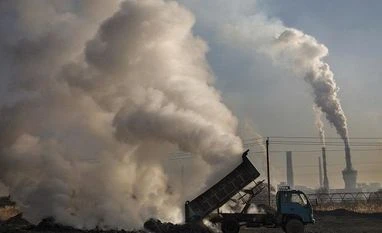 "2021 one of the seven warmest years on record: World Meteorological Org")
WebinarsNew
Deep DiveNew
Explore Business Standard
Although average global temperatures were temporarily cooled by the 2020-2022 La Nina events, 2021 was still one of the seven warmest years on record
Although average global temperatures were temporarily cooled by the 2020-2022 La Nina events, 2021 was still one of the seven warmest years on record, according to six leading international datasets consolidated by the World Meteorological Organisation (WMO).
The average global temperature in 2021 was about 1.11 degrees Celsius above the pre-industrial (1850-1900) levels. 2021 is the 7th consecutive year (2015-2021) where global temperature has been over 1 degrees C above pre-industrial levels, according to all datasets compiled by WMO.
Since the 1980s, each decade has been warmer than the previous one. This is expected to continue. The warmest seven years have all been since 2015, with 2016, 2019 and 2020 constituting the top three. An exceptionally strong El Nino event occurred in 2016, which contributed to record global average warming.
Global warming and other long-term climate change trends are expected to continue as a result of record levels of heat-trapping greenhouse gases in the atmosphere, the WMO said in a global release.
WMO uses six international datasets to ensure the most comprehensive, authoritative temperature assessment. The same data are used in its annual State of the Climate reports, which inform the international community on global climate indicators.
The rankings of individual years should be considered in the long-term context, especially since the differences between individual years are sometimes marginal.
"Back-to-back La Nina events mean that 2021 warming was relatively less pronounced compared to recent years. Even so, 2021 was still warmer than previous years influenced by La Nina. The overall long-term warming as a result of greenhouse gas increases is now far larger than the year-to-year variability in global average temperatures caused by naturally occurring climate drivers," said WMO Secretary-General, Professor Petteri Taalas.
"The year 2021 will be remembered for a record-shattering temperature of nearly 50 degrees Celsius in Canada, comparable to the values reported in the hot Saharan Desert of Algeria; exceptional rainfall, and deadly flooding in Asia and Europe as well as drought in parts of Africa and South America. Climate change impacts and weather-related hazards had life-changing and devastating impacts on communities on every single continent," Professor Taalas said.
La Nina refers to the large-scale cooling of the ocean surface temperatures in the central and eastern equatorial Pacific Ocean, coupled with changes in the tropical atmospheric circulation. It usually has the opposite impacts on weather and climate as El Nino. La Nina has a temporary global cooling effect, which is typically strongest in the second year of the event.
International Datasets
WMO uses datasets developed and maintained by the United States National Oceanic and Atmospheric Administration (NOAA), NASA's Goddard Institute for Space Studies (NASA GISS), the United Kingdom's Met Office Hadley Centre and the University of East Anglia's Climatic Research Unit (HadCRUT), and the Berkeley Earth group.
WMO also uses reanalysis datasets from the European Centre for Medium Range Weather Forecasts and its Copernicus Climate Change Service, and the Japan Meteorological Agency (JMA).
The Copernicus Climate Change Service estimated that 2021 was the 5th warmest year on record, but only marginally warmer than 2015 and 2018. NOAA and Berkeley Earth found that 2021 was nominally the sixth warmest year. NASA GISTEMP and HadCRUT have 2021 effectively tied for sixth warmest. Data from the Japanese Meteorological Agency (JMA) Reanalysis rank 2021 as nominally the seventh warmest year. The small differences among these datasets indicate the margin of error for calculating the average global temperature. Even the India Meteorological Department (IMD) had last week announced that the year 2021 was the fifth warmest year for India since nationwide records commenced in 1901.
The Paris Agreement seeks to hold the increase in the global average temperature to well below 2 degrees Celsius above pre-industrial levels while pursuing efforts to limit the temperature increase to 1.5 degrees Celsius above pre-industrial levels. At 1.11 degrees Celsius above the pre-industrial (1850-1900) levels, the global average temperature in 2021 is already approaching the lower limit of temperature increase the Paris Agreement seeks to avert.
Temperature is just one of the indicators of climate change. Others include greenhouse gas concentrations, ocean heat content, ocean pH, global mean sea level, glacial mass and sea ice extent.
--IANS
niv/dpb
(Only the headline and picture of this report may have been reworked by the Business Standard staff; the rest of the content is auto-generated from a syndicated feed.)
First Published: Jan 19 2022 | 2:43 PM IST


