After India opts out, Russia orders fifth- generation Sukhoi-57s

The first batch of Sukhoi-57s will enter services in 2019, stated Yuri Slyusar, chief of Russia's umbrella United Aircraft Corporation, under which Sukhoi operates
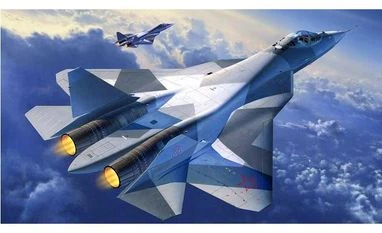
Sukhoi 57
Sukhoi 57
Ajai Shukla New Delhi
Last Updated : Jul 01 2018 | 7:08 AM IST
In a reminder of what the Indian Air Force (IAF) is missing, the Russian Air Force (RAF) has placed its first order of the Sukhoi-57, the Russian fifth-generation fighter that New Delhi recently decided not to co-develop and co-manufacture with Sukhoi. 

“The first contract for 12 [Sukhoi-57] aircraft will be signed soon, and the deliveries under this contract will begin shortly,” said Russian Deputy Defence Minister Alexey Krivoruchko on Saturday, according to Russia’s Sputnik News. The minister was visiting Komsomolsk-on-Amur, Sukhoi’s biggest plant that will build the Sukhoi-57. 

The first batch of Sukhoi-57s will enter services in 2019, stated Yuri Slyusar, chief of Russia’s umbrella United Aircraft Corporation, under which Sukhoi operates. 

As Business Standard first reported (April 20, $8.63-billion advanced fighter aircraft project with Russia put on ice), National Security Advisor Ajit Doval told Russian officials in February that Russia could proceed alone in developing the Sukhoi-57, or Fifth Generation Fighter Aircraft (FGFA), as its proposed Indian version was called. Doval said India might join the project later, or buy the Sukhoi-57 after it entered service in Russia. 

The RAF plans to field about 200 Sukhoi-57s, while the IAF was planning to build 127 FGFAs in Hindustan Aeronautics Ltd (HAL), which would also co-develop the Indo-Russian fighter with Sukhoi. But, in a turnaround last year, the IAF said the Sukhoi-57 lacked in key attributes like stealth, active scanning radar and the ability to super-cruise — or fly at supersonic speeds without using afterburners. 

Russian pilots and officials hotly contest this. They further argue that the Sukhoi-57 is currently flying with an interim engine, the NPO Saturn AL-41F1 turbofan, while Russian engine maker, NPO Saturn, develops the more powerful “Izdeliye 30” engine, which is expected to be ready by 2020.

The Sukhoi-57’s prototype, called Perspektivny Aviatsionny Kompleks Frontovoy Aviatsii (PAK-FA) first flew in January 2010. Since then, even as New Delhi and Moscow engaged in protracted negotiations, Sukhoi took the aircraft — there are currently at least 11 prototypes — through an extended flight-test programme. 

Now the Russian order indicates the RAF — a demanding customer — is satisfied with the Sukhoi-57’s performance. 

For India, the FGFA project was economical, if anything. HAL was to pay a half share — amounting to $4.3 billion — for 50 specified improvements to the Sukhoi-57 to meet IAF requirements of greater stealth, faster data networks and 360-degree radar. This included the cost of four Sukhoi-57 prototypes for the IAF to test-fly and the setting up of facilities to manufacture the FGFA in India. 

With each Sukhoi-57 production fighter estimated to cost $70 million (the Sukhoi-30MKIs that the IAF bought from Russia cost just $43 million each), the cost of each FGFA, including the $4.3 billion development cost amortised over the 127 fighters that HAL would build — would have amounted to $113 million each. 

The IAF would have obtained a fifth-generation, built-in-India fighter at a far cheaper price than the made-in-France Rafale, for which India is paying $162 apiece, excluding the additional cost of maintenance, spares and weapons. 

Another argument in favour of the FGFA was that co-developing the fighter with Russia would feed into the ongoing Indian development of a fifth-generation Advanced Medium Fighter Aircraft (AMCA). 

After the IAF argued that the FGFA would duplicate the AMCA project, an expert committee was set up under Air Marshal S Varthaman (Retired) to consider this. In July 2017, the committee ruled out any conflict between the FGFA and AMCA. 

Officials have hinted that New Delhi dropped out of the FGFA project at Washington’s nudging. Yet, Russia-related pressure continues, with new American legislation — “Countering America’s Adversaries Through Sanctions Act” (CAATSA) — threatening sanctions for buying weaponry from Russia, especially the S400 air defence system that Moscow and New Delhi have signed an agreement for. 

One subscription. Two world-class reads.

Already subscribed? Log in

Subscribe to read the full story →
*Subscribe to Business Standard digital and get complimentary access to The New York Times

Smart Quarterly

₹900

3 Months

₹300/Month

SAVE 25%

Smart Essential

₹2,700

1 Year

₹225/Month

SAVE 46%
*Complimentary New York Times access for the 2nd year will be given after 12 months

Super Saver

₹3,900

2 Years

₹162/Month

Subscribe

Renews automatically, cancel anytime

Here’s what’s included in our digital subscription plans

Exclusive premium stories online

  • Over 30 premium stories daily, handpicked by our editors

Complimentary Access to The New York Times

  • News, Games, Cooking, Audio, Wirecutter & The Athletic

Business Standard Epaper

  • Digital replica of our daily newspaper — with options to read, save, and share

Curated Newsletters

  • Insights on markets, finance, politics, tech, and more delivered to your inbox

Market Analysis & Investment Insights

  • In-depth market analysis & insights with access to The Smart Investor

Archives

  • Repository of articles and publications dating back to 1997

Ad-free Reading

  • Uninterrupted reading experience with no advertisements

Seamless Access Across All Devices

  • Access Business Standard across devices — mobile, tablet, or PC, via web or app

Next Story



