3 min read Last Updated : Nov 11 2021 | 11:44 PM IST
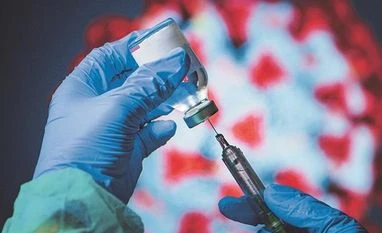
The Lancet publication, a peer-reviewed medical journal, has expressed a mixed opinion about Covaxin, a Covid-19 vaccine developed by Bharat Biotech.
In summary, it said that the “interim phase 3 report (funded by Bharat Biotech and Indian Council of Medical Research) suggests BBV152 Covid-19 vaccine (the scientific name for Covaxin) is safe and protects against disease”.
Extrapolating from the report, Lancet said ‘two doses offer 77.8 per cent protection against symptomatic Covid-19’. This compares favourably with Serum Institute of India’s (SII’s) Covishield vaccine developed by Oxford University.
However, The Lancet goes on to add: “Further research is needed to determine the vaccine’s long-term safety and effectiveness as well as its effectiveness against severe disease, hospitalisation, and death and effectiveness against the delta variant and other variants of concern.”
The study has “several limitations”, according to The Lancet. “Due to the low number of cases reported between the first and second vaccine doses, the researchers could not calculate vaccine efficacy after a single dose,’ it said. Also, pregnant women, those living with HIV or with severe comorbidities, were excluded from the study.
Jing-Xin Li and Feng-Cai Zhu of the Jiangsu Provincial Center for Disease Control and Prevention in China were quoted as saying Covaxin’s roll-out might improve supplies of Covid-19 vaccines in low and middle income countries, but “next steps for studies” should focus on “the long-term vaccine efficacy against symptomatic Covid-19”.
On 3 November, more than nine months after it was authorised to be administered in India, the World Health Organization (WHO) under its emergency use listing (EUL) procedure eventually approved use of Covaxin as a Covid-19 vaccine. The WHO’s Technical Advisory Group (TAG), made up of regulatory experts from around the world, reached the conclusion that “the vaccine meets WHO standards for protection against Covid-19”.
Britain’s apparent reluctance to recognise Covaxin had given rise to a diplomatic row between New Delhi and London. Negotiations also got bogged down on compatibility between the Indian and British apps connected with certification.
The United Kingdom officials’ messaging, including by its High Commissioner in India Alex Ellis, when read between the lines, was amply clear. They kept stressing, “We’re clear (SII’s) Covishield is not a problem.” This, when read between the lines, meant Covaxin seemed to be a problem.
Following WHO’s go-ahead, though, Britain announced it will allow Indian citizens not resident in the UK fully vaccinated by Covaxin to enter the country under a fairly blanket lifting of restrictions on almost all countries. Proof of double jabs need to be provided before travelling. Two days after arrival, passengers are required to take a Rapid Antigen Test.
Bharat Biotech was requested to react to The Lancet’s review. However, they had not done so until filing.