When the tyrants ruling BHU claim that they will not let their university become another JNU, it only means that they will not allow BHU to become a centre of coherent thought and knowledge, upholding great human values of freedom, fraternity and equality free from casteism, communalism and feudalism.
The tragedy with BHU is the decades-long ideological stagnation of the socio-political atmosphere outside it. There was a time, especially between 1960-80, when several cities of Purvanchal, including Ghazipur, Azamgarh, Banaras and Mirzapur, showed signs of growing awareness. But soon enough, the eagerness for change and rising public momentum came under attack by the upper-caste-feudal supremacy, dominating for centuries, riding on caste-based discrimination, emergence of criminal gangs and a nationwide wave of communalism. The wave had a couple of major centres in the country, of which Purvanchal was one. The communal controversy in Ayodhya and the Babri demolition had the most damaging impact on the political culture of the region. The little awareness that sporadic movements had created among the masses, seemed to vanish.
A new wave of Hindutva once again gave rise to an atmosphere of ignorance, arrogance and superstitious beliefs. It destroyed all opposition to the upper-class feudal supremacy by dismantling all rising mass movements. Despite immense possibilities, Purvanchal could generate neither an influential leadership nor an effective mass movement. The possibility of a major change at the grassroots collapsed. Had Purvanchal taken a big turn with new energy during 1970-80, the atmosphere at BHU would have been different. It was the time when a new forward streak was witnessed among the youth in Allahabad and Banaras and it was felt that BHU might change after all. Student movements then were led by socialist and leftist youth. But religious fanaticism, casteism, and finally, communalism stoked by the temple movement altered the course of the movement.

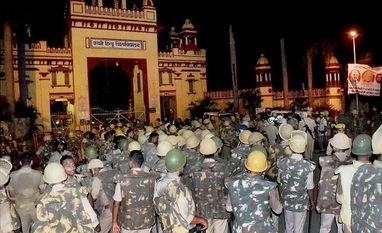 "BHU violence: How long will the university have to wait for progressive leadership?")










 Connect with us on WhatsApp