#BoycottMillennials to #SayItLikeNirmalaTai: FM Sitharaman inspires memes

The age of millennials offers little room for political missteps. Aspirations for a better lifestyle and prized possessions like cars still run high, despite the ongoing slump

Nirmala Sitharaman
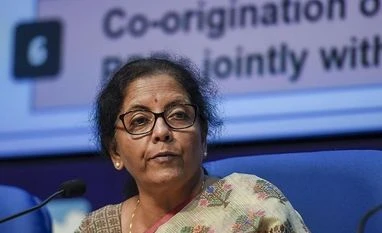
Finance Minister Nirmala Sitharaman | PTI
Ritwik Sharma
3 min read Last Updated : Sep 13 2019 | 9:34 PM IST
Who: Union Finance Minister Nirmala Sitharaman is not the likeliest of candidates to inspire meme-makers. Yet this week, her stern, matter-of-fact diagnosis of the current state of the Indian economy did not cut any ice with social media users as they joked it away. Sitharaman said that many factors were responsible for the slowdown in the Indian automobile industry — the worst in over two decades — including “the mindsets of millennials, who now prefer to have Ola and Uber rather than committing to buy an automobile”.

Where: As soon as Sitharaman spoke about millennials, she began to trend on Twitter under hashtags such as BoycottMillennials and SayItLikeNirmalaTai as hilarious tweets and memes poked fun at her theory. A user joked, "The life insurance industry is affected because millennials are already dead inside." Like automobiles, the agriculture sector witnessed a fall because millennials prefer pizza instead of dal-roti, said another. It was amply clear which way popular mood swung on social media: were millennials also to blame for the slowdown in truck sales, people wondered. Even the Congress party waded in with its own memes featuring Sitharaman, which appeared to have been too smart for its own good as some users slammed it as being sexist.

What: In August, domestic passenger vehicle sales fell for the tenth month in a row, according to the Society of Indian Automobile Manufacturers. Sitharaman had also referred to factors such as the movement towards Bharat Stage (BS)-VI norms and matters relating to registration for the decline in car sales. Uncertainty over the fate of BS-IV vehicles, once India adopts BS-VI in April next year, is viewed as one of the reasons for the slowdown, while car costs have reportedly risen in recent months due to regulatory policies. Among other reasons cited are rising petrol prices in the last four years and a gross domestic product slump to a six-year low in the June quarter that has led to a severe dip in consumption. More recently, amendments to the Motor Vehicle Act that have come into effect this month are unlikely to help carmakers, with much harsher penalties for violations liable to act as a deterrent to buying new vehicles.

To be fair, although the minister appeared to speak out of turn for the Twitterati she did mention that studies indicate a millennial preference for ride-hailing services rather than committing to pay monthly instalments and buy a car. Other commentators have also pointed out that ride-hailing apps are the bane of carmakers. However, the country's largest carmaker, Maruti Suzuki India, feels it may not be big enough a factor to cause the continuing dip in sales.

How: The age of millennials offers little room for political missteps. Aspirations for a better lifestyle and prized possessions like cars still run high, despite the ongoing slump. The trolling of the minister tells us more about the ruling party's earnest but rather unconvincing denial of damage to the state of India’s economy. Through the first term of the Narendra Modi government and into the early days of its second tenure now, several claims made in defence of its policies have been taken with a pinch of salt. A liquidity crisis and the after-effects of big-bang measures like demonetisation are viewed as reasons behind the overall economic decline. But like Sitharaman, several leaders of the ruling party have suggested — from drawing pakora analogies to emphasising the thriving self-employment to recommending that every household keep a cow and milk a healthy bank balance in future — that all is well.

One subscription. Two world-class reads.

Already subscribed? Log in

Subscribe to read the full story →
*Subscribe to Business Standard digital and get complimentary access to The New York Times

Smart Quarterly

₹900

3 Months

₹300/Month

SAVE 25%

Smart Essential

₹2,700

1 Year

₹225/Month

SAVE 46%
*Complimentary New York Times access for the 2nd year will be given after 12 months

Super Saver

₹3,900

2 Years

₹162/Month

Subscribe

Renews automatically, cancel anytime

Here’s what’s included in our digital subscription plans

Exclusive premium stories online

  • Over 30 premium stories daily, handpicked by our editors

Complimentary Access to The New York Times

  • News, Games, Cooking, Audio, Wirecutter & The Athletic

Business Standard Epaper

  • Digital replica of our daily newspaper — with options to read, save, and share

Curated Newsletters

  • Insights on markets, finance, politics, tech, and more delivered to your inbox

Market Analysis & Investment Insights

  • In-depth market analysis & insights with access to The Smart Investor

Archives

  • Repository of articles and publications dating back to 1997

Ad-free Reading

  • Uninterrupted reading experience with no advertisements

Seamless Access Across All Devices

  • Access Business Standard across devices — mobile, tablet, or PC, via web or app

Topics :Nirmala Sitharaman

Next Story




