
Brazilian, Indian startup satellite part of ISRO's first mission in 2021
Brazilian satellite Amazonia-1 and three Indian payloads are part of the mission
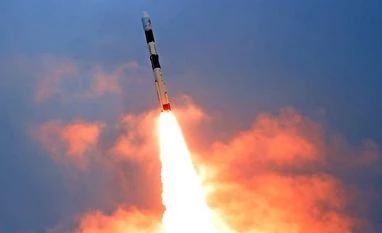 "Brazilian, Indian startup satellite part of ISRO's first mission in 2021")
Explore Business Standard
Brazilian satellite Amazonia-1 and three Indian payloads are part of the mission
In its first mission in 2021, India's space agency ISRO planned to launch on February 28 Brazilian satellite Amazonia-1 and three Indian payloads, including one built by a home-grown start-up.
The satellites are slated to be launched onboard the Polar Satellite Launch Vehicle (PSLV) C-51 at 10.28 am from the Sriharikota spaceport, over 100 kms from Chennai.
Secretary in the Department of Space and Chairman of Bengaluru-headquartered ISRO (Indian Space Research Organisation) K Sivan confirmed the PSLV-C51 schedule to PTI on Friday.
Amazonia-1, reportedly the first earth observation satellite entirely developed by Brazil, is the primary payload.
'Anand', 'Satish Dhawan' satellite and 'UNITYsat' will be the co-passengers.
'Anand' is built by Indian space startup, Pixxel, and 'Satish Dhawan Satellite' by Chennai-based Space Kidz India.
UNITYsat is a combination of three satellites designed and built as a joint development by Jeppiaar Institute of Technology, Sriperumpudur (JITsat), G. H. Raisoni College of Engineering, Nagpur (GHRCEsat) and Sri Shakthi Institute of Engineering and Technology, Coimbatore (Sri Shakthi Sat).
"PSLV-C51 marks the launch of the countrys first commercial private remote-sensing satellite (Anand) on an ISRO PSLV rocket", an ISRO official said.
Sivan had earlier described the upcoming mission as "special for us, special for the entire country" and beginning of a "new era of space (sector) reforms".
Pixxel CEO, Awais Ahmed had said: "We are elated with the fact that Indias first commercial private satellite will now launch on an Indian rocket.This is not only a proud moment for us as an organisation but also as citizens to work with our nations capabilities".
Bengaluru-based Pixxel has said it plans to build a constellation of 30 satellites by 2023.
The company inaugurated it's new facility here last month.
According to Space Kidz India, Satish Dhawan satellite (SD SAT), named after former ISRO chairman Satish Dhawan, aimed to study space radiation and Magnetosphere and demonstrate the indigenously designed and developed nanosatellite components.
"The satellite also tests the capabilities of LoRa technology in Space which could be helpful for many applications in the future in short and M2M communication", it said.
First Published: Feb 05 2021 | 1:52 PM IST


