CBI called in twice as often, files fewer charges
Ruchika Chitravanshi New Delhi In the months leading to the Lok Sabha elections, the Central Bureau of Investigation (CBI) has constantly been in the news for pursuing and registering cases, from coal block allocations to bribes-for-posts in the railways, from the AgustaWestland helicopter deal to the Saradha chit fund scam. Besides it has been investigating matters like the former corporate lobbyist Niira Radia tapes and informing courts on the telecom spectrum scandal.
Yet, data analysed by Business Standard over four years show Preliminary Enquiries (PEs) registered by CBI have risen dramatically from 2010 but First Information Reports (FIRs) and chargesheets filed have dipped over the period. The number of PEs has risen 94 per cent from 142 in 2010 to 276 in 2013, while the number of FIRs has fallen 1.36 per cent from 867 to 855 and the number of chargesheets has declined 21 per cent, from 842 to 666.
A majority of the FIRs are registered without a PE and the steep climb in the number of PEs creates a perception that the country's premier investigative agency might be biting off more than it can chew. "In many cases, there is a lack of evidence. So, we cannot register FIRs," a senior CBI official, who did not wish to be named, said. He added the agency also faced a personnel crunch and did not have adequate capability.
By the end of 2013, as many as 922 cases and inquiries were pending. While CBI might deny any political influence on decisions to register or quash an inquiry, many cases are in limbo as the agency gauges which way the wind will blow after a new government takes over.
CBI is under no pressure to take a decision in some of the high-profile FIRs in the coal allocation scam, involving Congress MP Naveen Jindal, former minister of state for coal Dasari Narayana Rao and industrialist Kumar Mangalam Birla, till July 7. The agency will file its status report on the coal scam by then, having committed to the Supreme Court that it would not close any case before that.
The agency also deferred questioning of former steel minister Ram Vilas Paswan for alleged involvement in irregularities in appointments at Bokaro Steel Plant till after the election. The Rs 10,000-crore Saradha scam, now under CBI scrutiny, can also lead to the doors of big political leaders but no action in the matter is likely until government formation.
Former minister in the National Democratic Alliance government, Arun Shourie, named in two PEs on the disinvestment of Hindustan Zinc and Laxmi Vilas Hotel in Rajasthan, questioned the CBI's motive in registering inquiries that do not generate any incriminating evidence.
The agency is defensive on this issue. "First investigation reports are registered to take a deeper look into the matter. It may or may not generate incriminating evidence," said CBI Director Ranjit Sinha. Sinha had gone on to say the agency was not foolish to register a case without evidence, referring to the allegations against Birla.
However, after getting close to filing a chargesheet against former telecom minister Dayanidhi Maran in the Aircel-Maxis case, the CBI has gone slow, citing internal differences of opinion and lack of evidence from Malaysia. The case is on the back burner till it gets an opinion from the solicitor general.
Political pressure aside, the agency also feels cases are getting more complicated and it lags in expertise to solve such crimes. Also, as CBI goes after the big fish, the evidence becomes harder to come by. "We can trace links to mid-level officers easily but the big guys have not signed any document or left a paper trail," an investigation officer said.

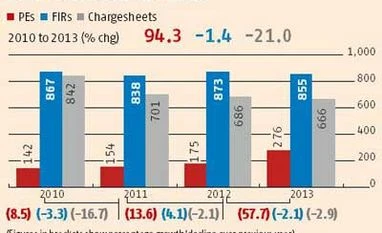 "CBI called in twice as often, files fewer charges")


 Connect with us on WhatsApp