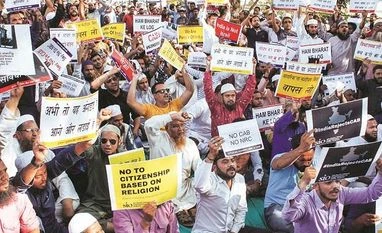
Centre notifies Citizenship Act amid protests; SC to hear pleas on Jan 22

The law has amended the Citizenship Amendment Act of 1955 to provide for Indian citizenship to Hindu, Sikh, Buddhist, Jain, Parsi and Christian migrants who have come to India until December 31, 2014

citizenship act
Home Minister Amit Shah’s statements in Parliament that CAA would be followed by NPR and NRC have led to misgivings in large sections of the society, particularly Muslims
Archis Mohan New Delhi
2 min read Last Updated : Jan 11 2020 | 3:10 AM IST
The Centre notified the Citizenship Amendment Act (CAA) on Friday. The notification comes nearly a month after Parliament passed it on December 11, and in the wake of sustained anti-CAA protests. The Supreme Court is set to hear petitions challenging the constitutionality of the law on January 22.

The Centre, by notifying the law, has indicated its resolve to implement it even as lawyers and retired judges, Opposition parties, activists, students and retired bureaucrats have criticised it as unconstitutional as it discriminates on the basis of religion.

Home Minister Amit Shah’s statements in Parliament that CAA would be followed by the National Population Register (NPR) and National Register of Citizens (NRC) have led to misgivings in large sections of the society, particularly Muslims, that they might lose citizenship and sent to detention camps. Kerala and West Bengal have said they would not implement the NPR, with other non-BJP ruled states also expressing reservations, which could sour Centre-state relations.

In recent weeks, Prime Minister Narendra Modi and Shah have said there are no plans to bring in NRC, and that no detention camps have come up. But protests have continued with over 30 people killed, mostly Muslims, across India, including at least 20 in BJP-ruled Uttar Pradesh. 

The law has amended the Citizenship Amendment Act of 1955 to provide for Indian citizenship to Hindu, Sikh, Buddhist, Jain, Parsi and Christian migrants who have come to India until December 31, 2014, because of religious persecution in Afghanistan, Bangladesh, and Pakistan. It does not provide for citizenship to Muslims.  It has also brought down the period of naturalisation for such migrants from 12 years to six years. 

The Act is not applicable to the tribal area of Assam, Meghalaya, Mizoram, and Tripura and all other areas of the Northeast covered under the ‘inner line permit’. 

It also provides for cancellation of the Overseas Citizen of India status of any non-resident Indian if they are found to violate any law.

One subscription. Two world-class reads.

Already subscribed? Log in

Subscribe to read the full story →
*Subscribe to Business Standard digital and get complimentary access to The New York Times

Smart Quarterly

₹900

3 Months

₹300/Month

SAVE 25%

Smart Essential

₹2,700

1 Year

₹225/Month

SAVE 46%
*Complimentary New York Times access for the 2nd year will be given after 12 months

Super Saver

₹3,900

2 Years

₹162/Month

Subscribe

Renews automatically, cancel anytime

Here’s what’s included in our digital subscription plans

Exclusive premium stories online

  • Over 30 premium stories daily, handpicked by our editors

Complimentary Access to The New York Times

  • News, Games, Cooking, Audio, Wirecutter & The Athletic

Business Standard Epaper

  • Digital replica of our daily newspaper — with options to read, save, and share

Curated Newsletters

  • Insights on markets, finance, politics, tech, and more delivered to your inbox

Market Analysis & Investment Insights

  • In-depth market analysis & insights with access to The Smart Investor

Archives

  • Repository of articles and publications dating back to 1997

Ad-free Reading

  • Uninterrupted reading experience with no advertisements

Seamless Access Across All Devices

  • Access Business Standard across devices — mobile, tablet, or PC, via web or app

Topics :Citizenship BillCitizenship Act

Next Story