
Chandrayaan-2 captures images of Moon; one of craters named after Sarabhai
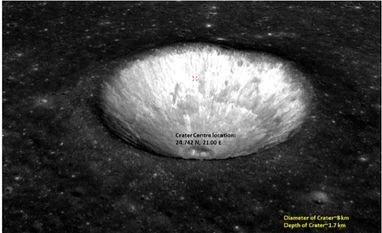
Chandryaan-2 has captured images of the Moon and one of the craters has been named after Vikram Sarabhai, the father of the Indian space programme
 "Chandrayaan-2 captures images of Moon; one of craters named after Sarabhai")
Explore Business Standard
Chandryaan-2 has captured images of the Moon and one of the craters has been named after Vikram Sarabhai, the father of the Indian space programme
Chandryaan-2 has captured images of the Moon and one of the craters has been named after Vikram Sarabhai, the father of the Indian space programme, a statement said on Friday.
Minister of State in the Prime Minister's Office Jitendra Singh said that as Sarabhai's birth centenary year completed on August 12, this is a thanksgiving tribute to the scientist.
Singh added that the recent achievements of ISRO, which have placed India as a frontline nation of the world, is a vindication of Sarabhai's visionary dream.
The Department of Space directly comes under the Prime Minister's Office.
"The Indian Space Research Organization (ISRO) has sought to pay tribute to him in a special way by announcing that Chandrayaan-2 Orbiter has captured the Moon images of 'Sarabhai Crater'," the statement quoting Singh said.
The Sarabhai Crater is around 250 to 300 kilometres east of the crater where the Apollo 17 and Luna 21 Missions had landed.
The statement said the Sarabhai Crater, captured in 3D images, shows that it has a depth of around 1.7 kilometres taken from its raised rim and the slope of crater walls is between 25 to 35 degrees. These findings will help space scientists understand further the process on the lunar region filled with lava.
"Chandrayaan-2 continues to perform as per design and provides valuable scientific data. The public release of scientific data from Chandrayaan-2 for global use will begin in October 2020," it added.
Planned to land on the South Pole of the Moon, Chandrayaan-2 was launched on July 22. However, the lander Vikram hard-landed on September 7, crashing India's dream to become the first nation to successfully land on the lunar surface in its maiden attempt.
The orbiter of the mission is working fine and has been sending data.
(Only the headline and picture of this report may have been reworked by the Business Standard staff; the rest of the content is auto-generated from a syndicated feed.)
First Published: Aug 14 2020 | 10:43 PM IST

