
China should come forward to help India in its NSG bid: Qamar Agha
He said that the other permanent members of the Security Council are supporting New Delhi except Beijing
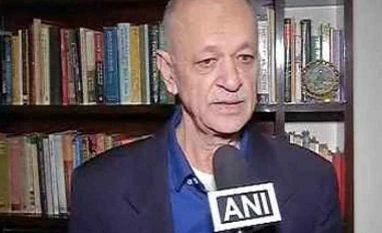 "China should come forward to help India in its NSG bid: Qamar Agha")
WebinarsNew
Deep DiveNew
Explore Business Standard
He said that the other permanent members of the Security Council are supporting New Delhi except Beijing
Defence Expert Qamar Agha on Wednesday said China being a permanent member of the Security Council has extra responsibilities and thus should come forward and support India in its bid to enter the elite Nuclear Suppliers Group (NSG).
"The people in this country are quite annoyed because of the Chinese-Pakistan stance on the NSG issue. In fact, if you look at the whole process China is the only country which is opposing India's move to get into NSG. So, therefore, the anger is there among the people. China is a permanent member of the Security Council. It should have been responsible because being a member of the Security Council they have extra responsibilities," Agha told ANI.
Agha stated that the other four permanent members of the Security Council are supporting India in its NSG bid, except China.
"I think the time has come China should realize that it's not only the members of the NSG who are supporting India's move into NSG, but the other countries also, who are not part of the process they want India to become a member of the NSG and they also want to sign with India the Civil Nuclear Cooperation agreements," Agha told ANI.
"China knows very well that if India becomes a member of the NSG, they would play a very major role in the global field. So, therefore, it is preventing. But the Chinese will not be able to prevent India's membership for a very long period of time because once the international community decides it becomes difficult for any country," he added.
The mouthpiece of the Chinese Government, "Global Times ", has strongly criticized India for attempting to seek admission to the 48-member NSG without being a signatory to the Non-Proliferation Treaty (NPT).
Reacting to New Delhi's failed bid to seek NSG membership at a plenary meeting of the grouping in Seoul, South Korea, last week, an editorial in the state-run Global Times described some Indians as too self-centered, self-righteous, and added that "nationalists in India should learn how to behave themselves" rather than criticizing Beijing for blocking the bid on what it termed justifiable grounds.
The article pointed that, "India's nationalists should learn how to behave themselves. Now, that they wish their country could be a major power, they should know how major powers play their games."
Justifying China's role, the editorial pointed that that "India is not a signatory to the NPT, but is the most active applicant to join the NSG."
The article said the Indian media played up the prospects of New Delhi's bid and some even claimed that among the 48-members of the NSG, 47 have given it a green light, except China.
It added: "Since its foundation in 1975, all NSG members shall be NPT signatories. This has become the primary principle of the organization. Now India wants to be the first exception to join the NSG without signing the NPT. It is morally legitimate for China and other members to upset India's proposal in defense of principles."
The article highlighted that due to Beijing's role in stopping New Delhi's bid a few Indian media outlets started vilifying China's position and some Indians even called for a boycott of Chinese-made products and a withdrawal from the BRICS group.
In a veiled attack, the article read that the US role in backing India's admission to the NSG actually serves to contain Beijing.
"US backing adds the biggest impetus to India's ambition. By cozying up to India, Washington's India policy actually serves the purpose of containing China," the article read.
"The US is not the whole world. Its endorsement does not mean India has won the backing of the world. This basic fact, however, has been ignored by India," it added.
Asserting that the Western world has been giving too many thumbs up to India and thumbs down to China, New Delhi is spoiled today.
"Although the South Asian country's GDP accounts for only 20% of that of China, it is still a golden boy in the eyes of the West, having a competitive edge and more potential compared to China. The international "adulation" of India makes the country a bit smug in international affairs," it read.
Highlighting India's absorption in the MTCR earlier on Monday and denial to China's access in the 34-nation MTC now 35th, the article read that New Delhi's news of admission didn't even make a ripple among the Chinese public and added that Chinese have become more mature in dealing with these setbacks caused by international relations.
First Published: Jun 29 2016 | 4:21 PM IST


 Connect with us on WhatsApp