
Covax delivers record 309 mn Covid vaccine doses in December
Gavi is one of the three principal backers of the programme, along with the World Health Organization and the Coalition for Epidemic Preparedness Innovations
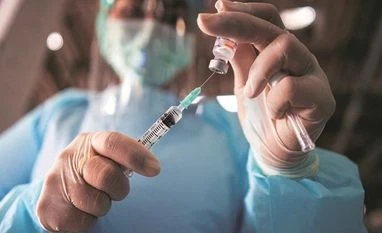 "Covax delivers record 309 mn Covid vaccine doses in December")
WebinarsNew
Deep DiveNew
Explore Business Standard
Gavi is one of the three principal backers of the programme, along with the World Health Organization and the Coalition for Epidemic Preparedness Innovations
COVAX, the international vaccine sharing scheme, delivered a record of more than 309 million Covid-19 doses in December, the media reported.
According to provisional tracking by Unicef, about 910 million doses were delivered through the UN-backed initiative as of December 30, The Washington Post reported.
However, the tally is still far short of the 2 billion-plus doses that Covax had initially aimed for.
"We're frankly getting toward a world where supply is not going to be as great a challenge as simply delivering the vaccine and getting it into people's arms," Lawrence Gostin, Director of the O'Neill Institute for National and Global Health Law at Georgetown University, was quoted as saying.
According to Olly Cann, director of communications at non-profit Gavi, a key factor for the accelerated pace is an increased level of advance notice from donors about when doses would be available.
This allowed recipient countries to better prepare to distribute and administer them, as many donated doses have short shelf lives.
"We don't want to be delivering to countries that aren't able to accept doses," Cann was quoted as saying.
Gavi is one of the three principal backers of the programme, along with the World Health Organization and the Coalition for Epidemic Preparedness Innovations.
More than 70 countries received doses through Covax in December, ranging in scale from Bangladesh, which received over 76 million doses, to Barbados, which received 14,040, the Post reported.
Other large recipients included Indonesia, the Philippines and Pakistan, each of which received at least 25 million doses in December.
Nearly half of the doses delivered in December came from three US-backed vaccine manufacturers: Johnson & Johnson, Moderna and Pfizer.
Covax was officially formed in April 2020 to ensure that low-and lower-middle-income countries had access to doses. The initiative called on rich countries to pool their resources to build a portfolio of doses that would be shared equitably.
But the initiative struggled to raise funding in 2020 and fell behind national governments in placing orders for doses with vaccine manufacturers.
During a news conference last week, WHO Director-General Tedros Adhanom Ghebreyesus voiced some optimism about vaccine supply in 2022, but added that the boosters being widely administered in many wealthy nations could skew global inequity further.
--IANS
rvt/svn/ksk/
(Only the headline and picture of this report may have been reworked by the Business Standard staff; the rest of the content is auto-generated from a syndicated feed.)
First Published: Jan 02 2022 | 2:39 PM IST


 Connect with us on WhatsApp