
Covid-19 antibodies present in 14.8: people in Haryana: Second sero survey
The second phase of the survey was held on October 19 and October 20, involving samples 14,477 people from all districts of the state
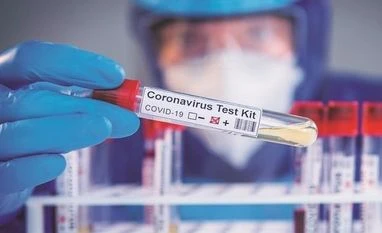 "Covid-19 antibodies present in 14.8: people in Haryana: Second sero survey")
WebinarsNew
Deep DiveNew
Explore Business Standard
The second phase of the survey was held on October 19 and October 20, involving samples 14,477 people from all districts of the state
A sero-prevalence survey conducted last month in Haryana has found that 14.8 per cent people have antibodies against the COVID-19 infection, state Health Minister Anil Vij said on Monday.
The second phase of the survey was held on October 19 and October 20, involving samples 14,477 people from all districts of the state, he said.
In the first survey, which was conducted during the month of August, antibodies were found in eight per cent people,Vij told reporters here while releasing the second sero survey report.
He said in rural areas, COVID-19 antibodies were found in 11.4 per cent of the people as against 19.8 per cent in urban areas. According to the report, 40.2 per cent of the people in Faridabad have antibodies, 37.1 per cent in Yamunanagar and 36.3 per cent in Panipat.
Faridabad registered 31.2 per cent people with antibodies, Yamunanagar 28.6 per cent and Jind 26.6 per cent.
The districts with sero-positive percentage below 10 per cent, Hisar 9.7 per cent, Mahendergarh 8.6 per cent, Charkhi Dadari 7.7 per cent, Sirsa 7.5 per cent, Palwal 5.5 per cent and Bhiwani 3.1 per cent.
The COVID-19 recovery rate in the state is 91.46 per cent and the case fatality rate is 1.06 per cent, Vij said.
About the objective of the survey, Additional Chief Secretary, Health, Rajeev Arora said that this will be useful to take appropriate measures to contain the spread of COVID-19.
The survey is about testing a group of individuals for the presence of antibodies as it helps in understanding the number of people affected by the disease, he elaborated.
Arora said it has been observed that the urban population was more affected by the coronavirus than the rural population.
Thus, low prevalence findings can be attributed to the proactive efforts made by the government to prevent the spread of infection, including prompt lockdown, effective testing strategies, effective containment and surveillance measures, including contact tracing and tracking, he said.
Dr Usha Gupta, Director, Health Department, said survey teams were constituted in all the 22 districts of the state and 720 samples were taken from urban and rural areas in each district for the purpose of the study.
(Only the headline and picture of this report may have been reworked by the Business Standard staff; the rest of the content is auto-generated from a syndicated feed.)
First Published: Nov 02 2020 | 11:16 PM IST


 Connect with us on WhatsApp