Covid: Pressure mounts on India to begin boosters as Omicron spreads

The heavily mutated and highly transmissible variant, which was discovered within India's borders earlier this month, has already led to 358 infections.
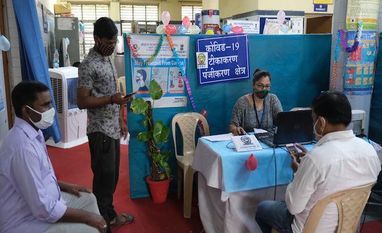
Covid, Covid-19
Photo: Bloomberg
Chris Kay | Bloomberg
4 min read Last Updated : Dec 24 2021 | 2:00 PM IST
India’s government faces a growing clamor from business leaders and public health experts to launch a Covid-19 booster drive and begin vaccinating children as the nation braces for a surge of omicron-fueled infections.

With ample vaccine supplies, India could begin inoculating those under 18 as well as administer third doses to front-line health care workers, the elderly and those at high risk since they got their first shots in early 2021, Kiran Mazumdar Shaw, the founder and chair of Biocon Ltd. -- one of India’s largest drugmakers -- told Bloomberg on Thursday.

“We need a booster policy for sure,” she said. “I really don’t know what’s holding it up -- it’s got nothing to do with vaccine availability.”

The heavily mutated and highly transmissible variant, which was discovered within India’s borders earlier this month, has already led to 358 infections. Now many, including Shaw, are asking that the country follow others’ lead by offering third doses to its population of almost 1.4 billion, as well as include children in the immunization program as schools reopen. 

Elsewhere, Japan has announced plans to accelerate the rollout of boosters and the U.K. has set a year-end deadline to offer all adults a third dose. Israel is even experimenting with a fourth Covid shot.

Recent studies show a third dose of AstraZeneca Plc’s vaccine -- which accounts for nearly 90% of doses administered in India -- significantly boosted neutralizing antibodies against omicron while immunity from two shots started waning after three months. The Indian Medical Association, which represents physicians, has urged the government to provide additional doses to front-line workers and individuals with compromised immune systems. 


While India has deployed more than 1.4 billion shots, only 41% of its population has been fully inoculated, according to Bloomberg’s Vaccine Tracker. That shortfall has been partly pinned on some remaining hesitancy, along with the fact that India has yet to start vaccinating people under 18.

As some cities, including New Delhi and Mumbai, begin to register a rising numbers of infections, many Indian states are also moving to reimpose restrictions on Christmas and New Year’s Eve celebrations and gatherings.

Anil Rajput, the head of corporate affairs at Kolkata-based conglomerate ITC Ltd., said on a panel in early December that there were “growing concerns on the need for a booster dose especially in the light of the new variant.” It was also crucial to limit vaccine wastage with many doses close to expiry, Rajput said.

Danger Reduced
India’s network of government-funded Covid genome sequencing labs said in late November that boosters should be considered for over-40s and those at high risk, as the danger of severe disease will likely be reduced.

India’s drug regulator has so far been reluctant to authorize third doses or childhood vaccinations until local trial data has been produced. Government officials have been reiterating targets to fully inoculating the country’s adult population first.

India’s health ministry didn’t immediately respond to a request for comment.

While the head of the Serum Institute of India Ltd. -- which is locally producing the AstraZeneca shots -- warned of a production drop two weeks ago due to lack of orders, Shaw expects demand to remain robust into 2022, especially if booster shots are deployed “every six months or whatever.”

Biocon inked a deal earlier this year with Serum for access to 100 million vaccine doses annually. 

Shaw knows from personal experience that protection offered by vaccines averts worst outcomes. Three weeks ago, 12 people in her household -- including her husband and domestic staff -- tested positive for Covid. But, being fully inoculated, they all had only mild symptoms and no one needed to go to a hospital.

“The vaccine did protect them against severe diseases,” she said. But as time goes by, “you will have waning antibodies -- I do believe you need boosters.”

One subscription. Two world-class reads.

Already subscribed? Log in

Subscribe to read the full story →
*Subscribe to Business Standard digital and get complimentary access to The New York Times

Smart Quarterly

₹900

3 Months

₹300/Month

SAVE 25%

Smart Essential

₹2,700

1 Year

₹225/Month

SAVE 46%
*Complimentary New York Times access for the 2nd year will be given after 12 months

Super Saver

₹3,900

2 Years

₹162/Month

Subscribe

Renews automatically, cancel anytime

Here’s what’s included in our digital subscription plans

Exclusive premium stories online

  • Over 30 premium stories daily, handpicked by our editors

Complimentary Access to The New York Times

  • News, Games, Cooking, Audio, Wirecutter & The Athletic

Business Standard Epaper

  • Digital replica of our daily newspaper — with options to read, save, and share

Curated Newsletters

  • Insights on markets, finance, politics, tech, and more delivered to your inbox

Market Analysis & Investment Insights

  • In-depth market analysis & insights with access to The Smart Investor

Archives

  • Repository of articles and publications dating back to 1997

Ad-free Reading

  • Uninterrupted reading experience with no advertisements

Seamless Access Across All Devices

  • Access Business Standard across devices — mobile, tablet, or PC, via web or app

Topics :CoronavirusOmicronCoronavirus Vaccine

Next Story



