3 min read Last Updated : Nov 29 2019 | 10:14 PM IST
Madonna and Infant Jesus painted by an unidentified Indian artist in the early 17th century borrows a biblical scene from a European print by Aegidius Sadeler while maintaining a strong Eastern expression. The flowers and wine flask are distinctly Mughal, while Mary and another woman in the room are wearing bindis and jewellery, as if goaded into doing so by an Indian elder.
India and the Netherlands in the Age of Rembrandt, an exhibition at the Chhatrapati Shivaji Maharaj Vastu Sangrahalaya (CSMVS) in collaboration with the Amsterdam-based Rijksmuseum, bears more evidence of how echoes of the Dutch style reached these shores and the other way round. The Mughals had expanded their rule over much of the subcontinent, while the Dutch, fresh from winning freedom from the Spanish Empire, arrived to set up the Dutch East India Company.
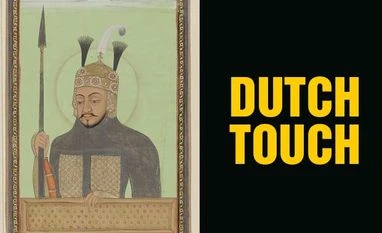
This sparked off a moment of globalisation and artistic exchange. Dutch traders began accumulating miniatures of rulers from the various dynasties in the country at the time — the Mughals, the Marathas, the Qutb Shahis of Golconda and Adil Shahis of Bijapur. Meanwhile, prints from the Netherlands, which Jesuit missionaries had brought with them, were already being circulated in India.
On display is a prized and rare etching of the Dutch master Rembrandt van Rijn from 1656 AD, where Abraham is depicted receiving three angels, and which he likely made after being inspired by Indian miniature. Also of particular interest is a work by Kesu Das, who had been employed in the courts of Akbar and Jahangir, where he gives a mannerist spin to the miniature format. In his powerfully built Roman Hero, Das draws from two engravings by the Dutch artist Hendrick Goltzius of the Roman figures Titus Albucius and Mucius Scaevola. Inscriptions in the Chagatai language used in the Mughal era complete Das’s picture.
Under the lens of magnifying glasses provided at the venue, it is possible to appreciate the finer points of these prints and also the openness and tolerance of that historical moment when cultures wished to know one another.
A SCHOLAR IN HIS OFFICE: Drypoint etching by Rembrandt, Collection of the Rijksmuseum
ABRAHAM WELCOMING THE ANGELS: Original etching and drypoint print, Rembrandt van Rijn, Collection of the Rijksmuseum, Amsterdam
MUCIUS SCAEVOLA: Engraving, Hendrick Goltzius, Collection of the Rijksmuseum
WHERE: India and the Netherlands in the Age of Rembrandt will be on display at the CSMVS Special Exhibitions Gallery in Mumbai; WHEN: Until December 16
ROMAN HERO: Indian miniature, Kesu Das, Collection of the Rijksmuseum
MADONNA AND INFANT JESUS: Mughal miniature, Collection of the Chhatrapati Shivaji Maharaj Vastu Sangrahalaya, Mumbai
The Mughals had expanded their rule over much of the subcontinent, while the Dutch arrived to set up the Dutch East India Company