Home / India News / Delhi riots case: High Court asks Sharjeel Imam to place case documents
Delhi riots case: High Court asks Sharjeel Imam to place case documents
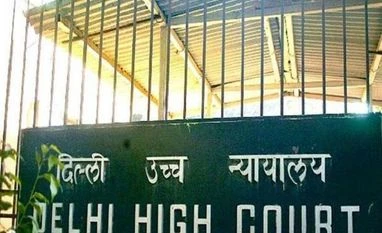
The Delhi High Court on Friday adjourned the appeals of JNU scholar-activists Sharjeel Imam and Umar Khalid to May 19 and 24 respectively, who had challenged the trial court orders
According to police, Imam made alleged inflammatory speeches in Jamia Millia Islamia, Delhi, on December 13, 2019, and Aligarh Muslim University, Uttar Pradesh, on January 16, 2020.
The Delhi High Court on Friday adjourned the appeals of JNU scholar-activists Sharjeel Imam and Umar Khalid to May 19 and 24 respectively, who had challenged the trial court orders that refused them bail in the alleged larger conspiracy behind the Delhi riots.
A division bench comprising Justices Siddharth Mridul and Rajnish Bhatnagar asked Sharjeel to submit the FIR and charge sheet registered against him in connection with the alleged offensive speeches delivered by him at Aligarh in Uttar Pradesh.
During the course of the hearing, Sharjeel's counsel Tanveer Ahmed Mir, suggested the sharing of the FIR on the screen. However, the court refused to admit Mir's argument. "The screen share business has to stop. It's not a power-point presentation. A charge sheet is a germane document for determining bail, it has to be placed on record. You should put it on record. We don't have a photographic memory," the court stated.
Sharjeel Imam had approached the Delhi High Court challenging the April 11 trial court order which refused him bail in the larger conspiracy case.
"There is absolutely no material that has been adduced by the prosecution, attributed to the Appellant from which it could even remotely be suggested that the Appellant at any point in time had any intention to cause/incite violence. Rather from the material relied upon by the prosecution itself, which the Ld. Special Court has failed to take into consideration, it is manifestly clear that the Appellant to the contrary had on multiple occasions very categorically and emphatically called the protesters to not resort to violence at any cost," said his appeal.
According to police, Imam made alleged inflammatory speeches in Jamia Millia Islamia, Delhi, on December 13, 2019, and Aligarh Muslim University, Uttar Pradesh, on January 16, 2020.
He has been in judicial custody since January 28, 2020, and is currently lodged in Tihar jail in Delhi. Umar Khalid had also knocked the doors of the high court following a similar situation of bail denial in the trial court.
His alleged offensive speeches delivered at Maharashtra's Amravati during the protests against the Citizenship Amendment Act and the National Register of Citizens were the basis of allegations against him in the riots case.
During the last hearing, the petitioner submitted the materials and case laws detailing the meaning of the words 'krantikari' and 'inquilab' which were used by him in the alleged speeches.
The riots broke out in northeast Delhi in February 2020 after clashes between the anti-CAA (Citizenship Amendment Act) and pro-CAA protesters took a violent turn. The mayhem, which coincided with the then US President Donald Trump's maiden trip to India, saw more than 50 people lose their lives and over 700 injured.
(Only the headline and picture of this report may have been reworked by the Business Standard staff; the rest of the content is auto-generated from a syndicated feed.)

 "Delhi riots case: High Court asks Sharjeel Imam to place case documents")


 Connect with us on WhatsApp