
Did Indian troops cross border? China map shows disputed Sikkim land as own
The map shows Doka La - called Donglong by China - as part of Chinese territory
 "Did Indian troops cross border? China map shows disputed Sikkim land as own")
WebinarsNew
Deep DiveNew
Explore Business Standard
The map shows Doka La - called Donglong by China - as part of Chinese territory
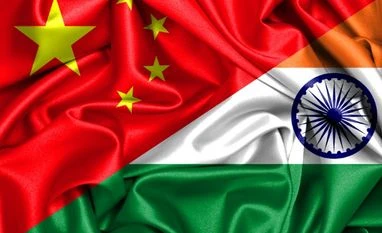
China has released a map showing the Donglong region in the Sikkim sector as its territory and to back its claims of Indian troops "trespassing" the Chinese boundary.
The map, released by the Chinese Foreign Ministry late on Friday evening, shows the Chinese territory far south of the Donglong region, the ownership of which is yet to be agreed between Bhutan and China.
The blue arrow shows Doka La pass where Indian troops "crossed the border".
China alleges Indian troops crossed the border on June 18.
The map shows Doka La - called Donglong by China - as part of Chinese territory.
Donglong is at a tri-junction border of Bhutan, China, and India, where People's Liberation Army troops and the Indian Army faced off.
Bhutan has accused China of building a road in Donglong, which Thimphu says is part of its area.
China has rejected the claims and asked New Delhi to withdraw troops from the region.
India has said Beijing's action to "unilaterally determine tri-junction points" is in violation of a 2012 India-China agreement.
According to the agreement, the boundary will be decided by consulting all the concerned parties.
The release of the map comes as China has maintained that locals have been traditionally herding cattle in Donglong area, which it said is fact enough to prove that the region belongs to Beijing.
China was responding to the Bhutanese government's accusations against China of not respecting border agreements and constructing a road on the disputed territory located between the two countries.
Chinese Foreign Ministry spokesperson Lu Kang said here on Friday: "We are exercising complete and comprehensive administration over the Doklam (Donglong) region and our border troops and the residents around the border are herding their cattle along this."
"This evidence is recognised by the Bhutan side," Lu added.
"From historical evidence, we can see that Doklam has been a traditional pasture for the Tibetan residents and we have exercised good administration over the area.
"Before the 1960s, if Bhutan residents around the border wanted to put their cattle they had to get the approval from China," Lu said citing Chinese history.
Beijing has asked New Delhi to withdraw troops, reiterating it as a precondition to settle an ongoing stand-off in India's Sikkim sector, where the two countries share a little over 200 km of border.
Following the face-off, China has suspended the pilgrimage to Kailash Mansarovar in Tibet where Indians travel via Nathu La Pass, which is shut now.
In response, India on Friday said it has told China that the building of a road by Chinese troops in the Donglong region will have "serious security implications for India" and urged Beijing "not to change the status quo unilaterally".
"India is deeply concerned at the recent Chinese actions and has conveyed to the Chinese government that such construction would represent a significant change of status quo with serious security implications for India," an External Affairs Ministry statement said in New Delhi.
First Published: Jul 02 2017 | 4:05 PM IST


 Connect with us on WhatsApp